
Brown Spots in Lawn That Don’t Go Away
Brown Spots in Lawn That Don’t Go Away

Why Brown Spots in Lawn Often Stick Around
Few yard problems are more frustrating than stubborn brown patches that linger week after week. You water. You fertilize. You hope. Yet the spots remain or keep coming back. The truth is that brown spots in lawn usually have more than one cause. A hot spell can weaken grass, then a fungus moves in, or grubs start eating roots, or your sprinkler misses a corner. In Chicagoland and northern Illinois, cool season grasses like Kentucky bluegrass, perennial ryegrass, and fescue face shifting weather, clay soils, and heavy foot traffic. That mix creates ideal conditions for recurring damage.
At Poul’s Landscaping & Nursery, we have seen every version of this problem since 1966. The key is to identify the specific cause on your property, treat it at the root, and put a prevention plan in place. The guide below will help you spot patterns, diagnose the issue, and take steps that actually restore green, healthy turf.
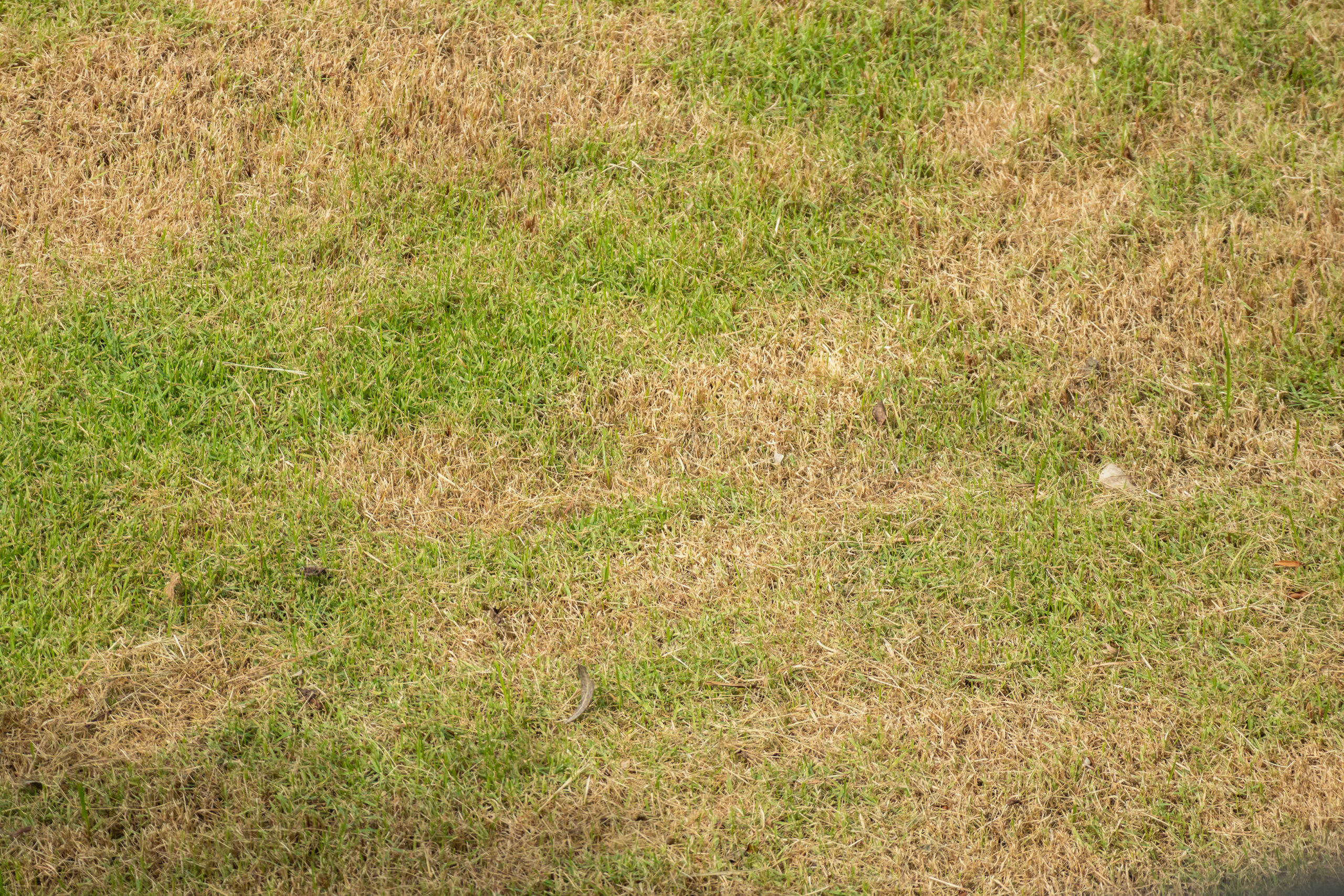
Green grass and damage dry grass texture background
Green grass and damage dry grass texture background
Spot Check: What Kind of Brown Spot Are You Seeing?
Clues From Size, Shape, and Timing
Before you reach for a quick fix, take a close look at the pattern. Different causes create distinct signs.
- Scattered small spots the size of a silver dollar often point to dollar spot disease.
- Circular or crescent shapes with a darker edge can suggest brown patch or necrotic ring spot.
- Edges along sidewalks or driveways may signal heat or salt stress.
- Yellow centers that turn straw brown with a green ring outside often point to dog urine.
- Large irregular patches that lift like a loose carpet can indicate grub damage.
- Streaks that follow mower paths can result from dull blades or scalping.
- Spots in shaded, damp areas may be from fungus or moss pressure.
- Spots in sunny slopes may be from drought or poor irrigation coverage.
Common Causes of Brown Spots in Lawn
- Drought stress from shallow or infrequent watering.
- Pet urine, especially from female dogs that release more concentrated urine in one spot.
- Fungal diseases like dollar spot, brown patch, red thread, snow mold, and necrotic ring spot.
- Insect damage from white grubs, chinch bugs, or sod webworms.
- Thatch buildup that blocks water and roots.
- Compacted soil that limits air and water movement.
- Mower problems including dull blades or cutting too short.
- Nutrient imbalances or fertilizer burn.
- Salt damage from winter de-icing or winter desiccation from wind and sun.
- Poor irrigation coverage or clogged sprinkler heads.
- New sod drying out or not rooting due to uneven soil contact.
- Shade stress where turf species are not suited for low light.
How to Diagnose Your Brown Spots at Home
A little investigation goes a long way. Use this simple checklist to narrow down the cause before you treat.
- Tug test. Grab a handful of grass at the edge of a brown spot and gently pull. If it lifts easily with little resistance, suspect grubs or severe root rot. If it stays anchored, look at other causes.
- Shovel slice. Cut a small, square plug about 3 inches deep at the edge of the damage. Inspect for white, C-shaped grubs, a gray or black fungal mat, or compacted, hard soil.
- Moisture check. Push a screwdriver into the soil. If it is hard to insert more than an inch, the area is likely dry or compacted.
- Thatch depth. Look at the spongy layer between grass and soil. More than one-half inch of thatch can block water and invite disease.
- Sprinkler audit. Place empty tuna cans across the lawn and run your system for 20 minutes. Compare water levels. Big differences show coverage problems.
- Blade test. Inspect grass tips. Ragged, frayed ends point to dull mower blades. Clean, angled cuts indicate sharp blades.
- Timing and weather. Did the spots appear after a heat wave, a week of rain, a fertilizer application, or winter snow melt? Timing is a big clue.
- Pet pattern. Are the spots near favorite potty areas, along a fence, or by the back door? Pet damage often follows routines.
- Shade and traffic. Are the spots where kids play, footpaths form, or under trees with thin air circulation? Compaction and shade are common triggers.
- Soil test. If problems keep returning, a simple soil test for pH and nutrients can reveal hidden causes.
Fixes That Actually Work
Quick Wins You Can Do Today
- Water deeply and less often. Aim for 1 inch of water per week in spring and fall, 1.5 inches in summer. Water early morning so leaves dry quickly.
- Raise mower height to 3 to 3.5 inches for cool season lawns. Taller grass shades roots and reduces stress.
- Sharpen mower blades. Sharp blades cut cleanly and prevent shredded tips that brown fast.
- Flush pet spots with a hose right after accidents. Diluting urine limits burn.
- Clear thatch and debris. Lightly rake matted grass for better airflow, especially after snow mold.
- Adjust sprinkler heads and fix leaks. Make sure water reaches corners and sunny slopes.
Targeted Treatments by Cause
- Drought stress. Increase deep watering and reduce frequency. Add organic matter with topdressing. Overseed with drought tolerant fescue blends.
- Pet urine. Designate a gravel or mulch potty area and train your dog to use it. Water the spot immediately. Reseed damaged areas with a pet tolerant mix. Gypsum may help with sodium but will not fix concentrated nitrogen burns. Water is the best tool.
- Fungal diseases. Improve airflow and morning sun. Water early, not in the evening. Avoid over fertilizing with quick nitrogen in summer. For severe cases like brown patch or dollar spot, apply a lawn fungicide labeled for your grass, rotating active ingredients to prevent resistance. Poul’s Landscaping & Nursery can time treatments based on local weather patterns.
- Grubs. If you count more than 6 to 10 grubs per square foot, treat with an appropriate product. Use preventive treatments in late spring to early summer, and curative treatments in late summer if damage appears. Water in products as directed. Reseed thin patches once grubs are controlled.
- Chinch bugs or sod webworms. Confirm activity with a float test or by inspecting thatch. Treat with an labeled insect control and follow timing carefully.
- Thatch. Dethatch lightly in early fall for cool season lawns. Follow with overseeding and topdressing with compost to rebuild the soil biome.
- Compaction. Core aerate in fall. Fill holes with compost or a compost topdressing. Overseed immediately after aeration for best seed-to-soil contact.
- Mower issues. Keep blades sharp and avoid cutting more than one third of the blade at a time. Alternate mowing patterns to reduce rutting.
- Nutrient imbalances. Use a slow release fertilizer matched to soil test results. In our area, two to four balanced feedings per season work well. Avoid heavy summer nitrogen in heat waves.
- Salt and winter damage. In spring, water heavily to flush salts. Apply gypsum if soil tests indicate high sodium. Choose calcium based de-icers near turf and shovel piles away from lawn edges in winter.
- Irrigation coverage. Reposition heads for head-to-head coverage. Trim plant growth blocking spray. Consider a smart controller to match watering to weather.
- New sod care. Roll sod after install to remove air pockets. Water daily at first, then taper slowly. Avoid heavy foot traffic until roots knit into the soil.
- Shade stress. Thin tree canopies for filtered light. Switch to fine fescue blends better suited for shade. Consider mulch beds where grass will never thrive.
When to Reseed or Resod
Once you stop the cause, fill bare areas so weeds do not invade. For cool season lawns, early fall is the prime window for overseeding. Soil is warm, air is cooler, and rain is more reliable. Spring is the second choice. Pick seed blends matched to your sun exposure and soil type. If large sections failed or you want an instant fix, resod the area after correcting the underlying issue. Poul’s Landscaping & Nursery can guide you on the best varieties and timing for your yard.
Prevention Playbook for a Greener Lawn
- Mow high and often. Keep grass at 3 to 3.5 inches and never remove more than one third of the blade.
- Water deeply. Target 1 inch per week in spring and fall, 1.5 inches in summer. Use a rain gauge or tuna cans to track water.
- Feed smart. Apply slow release fertilizer in early spring, late spring, early fall, and late fall if needed. Adjust based on soil tests.
- Aerate and overseed in fall. Reduce compaction and improve root growth with annual aeration. Overseed right after.
- Manage thatch. Keep thatch under one-half inch with annual aeration and periodic dethatching if needed.
- Sharpen mower blades three to four times per season. Dull blades cause tip burn and brown cast.
- Improve soil. Topdress thin areas with compost to boost microbial life and water retention.
- Monitor for pests. Look for early signs of grubs or chinch bugs. Treat at thresholds, not just by the calendar.
- Control disease pressure. Water only in the morning, reduce thatch, and avoid over fertilizing in heat.
- Protect edges in winter. Use plant safe de-icers, shovel snow piles away from turf, and mark driveway edges to reduce plow salt spillover.
- Train pets to a designated potty area. Keep a hose handy to flush spots right away.
- Upgrade irrigation. Use matched nozzles, maintain heads, and consider a smart controller to reduce waste and stress.
Seasonal Guide for Chicagoland Lawns
Spring
- Rake lightly to remove winter debris and break up matted grass.
- Apply a balanced, slow release fertilizer after soil warms.
- Overseed thin areas if needed, or plan for a larger overseed in fall.
- Test sprinklers and fix coverage gaps early.
- Watch for snow mold and treat lightly damaged areas with raking and airflow improvements.
Summer
- Raise mowing height to reduce heat stress.
- Water deeply in the early morning. Avoid evening watering.
- Scout for disease during hot, humid stretches and treat promptly if needed.
- Flush pet spots and hot edges along concrete.
- Hold off on heavy nitrogen until cooler weather returns.
Fall
- Core aerate and overseed for the best long-term results.
- Topdress with compost to improve soil structure.
- Apply a balanced fertilizer to support root growth.
- Repair summer damage and reset irrigation for cooler temps.
- Plan tree pruning to increase light and airflow next season.
Winter
- Mark driveway and walkway edges to reduce salt splash onto turf.
- Use calcium chloride or magnesium chloride instead of rock salt near grass.
- Avoid piling heavy, salty snow onto the lawn.
- Minimize traffic on frozen or snow covered turf to prevent crown damage.
Why Choose Poul’s Landscaping & Nursery
Poul’s Landscaping & Nursery has been caring for local lawns and landscapes since 1966. Our story began with Paul, known as Poul, after he came to the United States from Denmark. What started with one truck grew into a trusted family company with deep roots in the community. Today, the second generation leads the team, and our nursery fields in Wadsworth supply hardy, region tested plants. That depth of local knowledge helps us diagnose brown spots in lawn faster and fix them the right way. We combine turf science with practical maintenance to give you results that last.
Whether you need a one time rescue, a full overseed and aeration plan, or ongoing lawn care, Poul’s Landscaping & Nursery can help. We also offer irrigation audits, drainage improvements, seasonal color, and even holiday lighting to make your property shine year round. If you are tired of chasing the same brown spots in lawn every summer, it may be time for a custom plan built around your soil, sun, and lifestyle.
Frequently Asked Questions About Brown Spots in Lawn
- Why do brown spots return after I water and fertilize? Many brown spots are not caused by a lack of water or nutrients. Fungal disease, grubs, pet urine, or compaction can persist even with regular care. Diagnose first, then treat the root cause.
- How can I tell if it is a fungus or drought? Check the pattern and timing. Disease often shows spots with defined edges and appears after humid weather. Drought is more uniform on sunny slopes and improves quickly with deep watering.
- Do I need to remove dead grass before reseeding? Yes. Rake out dead thatch and loosen the soil so seed contacts the ground. Topdress with a thin layer of compost for better germination.
- Are dog spots permanent? No. Flush new spots with water right away. For older burns, rake, add a bit of fresh soil, and reseed. Create a designated potty zone to prevent new damage.
- When is the best time to fix brown patches? Early fall is ideal for long term fixes. Cooler nights and warm soil favor root growth and seed germination.
- Will a grub treatment fix all my brown spots? Only if grubs are the cause. Confirm with a shovel check. Treat once thresholds are met, then repair turf with seed or sod as needed.
- Can I grow grass in deep shade? Some shade tolerant fine fescues do well with a few hours of filtered light. In heavy shade, consider mulch or shade plants instead of turf.
- How long until brown spots green up? Drought spots can recover in days with proper watering. Disease and insect damage may take weeks and often require reseeding or resodding.
Ready to Restore Your Lawn?
You do not have to live with stubborn brown spots. With the right diagnosis and a focused plan, your yard can bounce back stronger than ever. Poul’s Landscaping & Nursery brings decades of local experience, a dedicated team, and a full nursery behind every job. Contact us to schedule a lawn assessment. We will identify what is really causing those brown spots in lawn, outline a clear fix, and set you up with a prevention plan so your grass stays green and healthy all season long.
