
Does My Tree Have Emerald Ash Borer? What to Look For
Does My Tree Have Emerald Ash Borer? What to Look For

Does My Tree Have Emerald Ash Borer? What to Look For
If you are searching for tree disease control near me because your ash tree looks tired or stressed, you are not alone. Emerald Ash Borer has damaged millions of ash trees across the Midwest, and early action is the best way to save the trees that matter most to you. In this guide, the team at Poul’s Landscaping & Nursery explains how to spot Emerald Ash Borer warning signs, what to do next, and how professional treatment can protect your landscape investment.
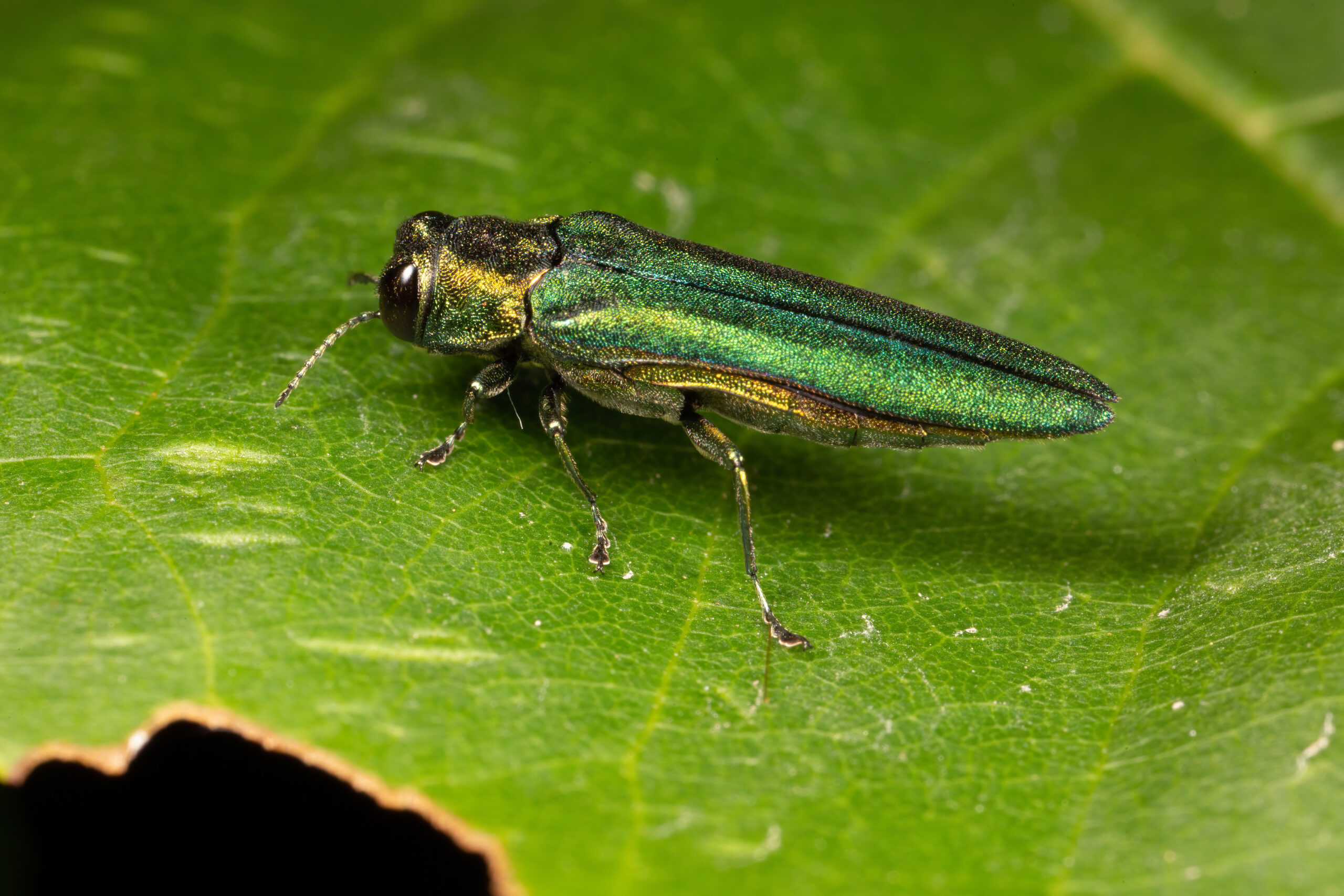
Macro of an Emerald Ash Borer
What Is Emerald Ash Borer and Why It Matters
Emerald Ash Borer, often called EAB, is a small metallic green beetle that attacks and kills ash trees. The adult beetles lay eggs on ash bark. After hatching, the larvae tunnel under the bark and feed on the inner tissue that moves water and nutrients through the tree. This hidden feeding disrupts circulation, starves the canopy, and can kill an untreated tree in just a few years. EAB is an invasive pest with no natural predators here, which is why it spreads quickly once it reaches a neighborhood. Knowing the signs and acting fast is critical if you want your ash to survive.
Early Warning Signs of Emerald Ash Borer
Many homeowners miss the first signs of EAB because they look like general stress. Look for the symptoms below and take notes on where and when you notice them. The more signs you see at once, the higher the chance that EAB is the cause.
D-shaped exit holes
As new adult beetles leave the tree, they chew a distinctive D-shaped hole in the bark, about the size of a grain of rice. These holes are flat on one side and rounded on the other. You may find them on the trunk or larger branches. If you see many of these holes on an ash, it is a strong sign of EAB activity.
Canopy dieback and thinning
One of the earliest visible symptoms is thinning leaves in the upper third of the canopy. Branch tips look bare. Over one to three years, the dieback moves downward, and entire sections of the crown may look sparse. If your ash had a full canopy last summer and now looks thin at the top, EAB could be the reason.
Bark splits and S-shaped galleries
Larvae feed just under the bark and carve S-shaped tunnels called galleries. As the tree tries to heal, the bark may split vertically, revealing the winding galleries beneath. Carefully lifting a loose piece of bark may show these serpentine patterns. This is a hallmark of EAB.
Epicormic shoots and trunk sprouts
When the crown is stressed, ash trees sometimes push out new shoots on the trunk or near the base. These sprouts, called epicormic shoots, are a survival response. If you see a flush of water sprouts on the trunk at the same time the top is thinning, EAB is a likely cause.
Woodpecker activity and bark flecking
Woodpeckers love to feed on EAB larvae. Increased pecking on an ash, with bark flakes on the ground or pale patches where bark has been chipped away, is often an early clue. More woodpeckers on your ash means it is time to look closely for other EAB signs.
Small leaves and early fall color
EAB-infected ash often produce smaller-than-normal leaves. Stressed ash may also turn color and drop leaves earlier than other trees on your property. One symptom alone is not proof, but together these are meaningful clues.
How to Tell EAB from Other Tree Problems
Other issues can look similar to EAB, so it helps to compare signs before you decide on next steps. Drought and general stress can cause leaf scorch and mild thinning, but they do not cause D-shaped exit holes or S-shaped galleries under the bark. Ash anthracnose can create leaf spotting and early drop in spring, then the canopy often rebounds in summer. EAB damage tends to get worse through the season. Other borers make round or oval exit holes and leave different feeding patterns beneath the bark. If your ash shows a mix of canopy dieback, trunk sprouts, woodpecker damage, and D-shaped holes, call for an inspection. When homeowners type tree disease control near me, they are often dealing with a complex problem that needs a trained eye and a focused plan.
What To Do If You Suspect Emerald Ash Borer
If you think your ash has EAB, time matters. Here is a simple action plan that helps protect your tree and your neighborhood trees.
- Take clear photos of symptoms. Capture D-shaped holes, bark splits, canopy thinning, trunk sprouts, and any woodpecker activity. Photos help track changes over time.
- Check multiple sides of the tree. EAB damage may show on the sunny side first, so walk all the way around and look from different angles.
- Do not move firewood. Moving infested wood can spread EAB to new areas. Keep any cut wood on site until a professional advises you.
- Contact a local expert. Search for tree disease control near me and select a trusted company with experience in EAB. Poul’s Landscaping & Nursery offers professional diagnosis and treatment options for ash trees across our local communities.
- Schedule an on-site inspection. A trained plant health care specialist can confirm EAB, measure the tree, assess canopy loss, and discuss the best path forward.
Treatment Options That Work
Treatment success depends on timing, tree health, and selecting the right method. A healthy ash with minimal canopy loss often responds well if treated early. Trees with advanced damage and major structural issues may be safer to remove and replace. Poul’s Landscaping & Nursery will give you honest guidance that matches your goals, your tree’s condition, and your budget.
Trunk injections for high-value trees
For many ash trees, professional trunk injection is the most reliable option. This method delivers a proven active ingredient directly into the tree’s vascular system where larvae feed. One injection can protect the tree for multiple seasons, so it often provides the best long-term value for large or important trees. Best timing usually begins in late spring as leaves expand, but can vary with weather and local conditions. The earlier you begin, the better your chance of holding canopy and preserving structure.
Soil and bark treatments
Some trees can benefit from systemic soil applications or bark sprays that move protection up into the canopy. These options may be applied annually and are usually best for smaller diameter ash or as a supplement in a comprehensive plan. Always rely on a licensed professional who follows label directions and local rules. The team at Poul’s Landscaping & Nursery will recommend the approach that balances effectiveness and stewardship of your landscape and the surrounding environment.
When removal is the safer choice
If more than about 40 percent of the canopy is gone, or if the trunk shows severe structural damage, removal is often the safest path. Dead or declining ash can become brittle and hazardous, especially in storms. Poul’s Landscaping & Nursery can remove unsafe ash in a planned, controlled way and advise on replacement trees that restore shade and curb appeal. We also help you diversify species to reduce future risk.
Prevention and Long-Term Tree Health
Healthy trees handle stress better, and prevention saves money in the long run. If you still have untreated ash nearby or if your neighborhood has had EAB in the past, consider these proactive steps.
- Water during dry spells. Deep watering during drought supports the tree’s natural defenses.
- Mulch the root zone. A two to three inch layer of mulch keeps roots cool and reduces competition from grass. Keep mulch a few inches away from the trunk.
- Avoid trunk injury. Nicks from mowers and string trimmers create entry points for pests and disease.
- Prune with purpose. Prune at the right time of year and remove dead or crossing branches. Avoid heavy pruning during peak EAB activity.
- Do not move firewood. Buy it where you burn it to help stop the spread of invasive pests.
- Monitor yearly. A quick spring or early summer walkthrough can catch changes before they become severe.
- Diversify your landscape. Plant a mix of tree species to reduce the impact of any single pest in the future.
Why Homeowners Choose Poul’s Landscaping & Nursery
Poul’s Landscaping & Nursery has helped local families care for their landscapes since 1966. Our story began when Paul, known by the Danish spelling Poul, started the company with a single truck and a passion for plants. From the basement office of the family home in Prospect Heights to our nursery in Long Grove and wholesale fields in Wadsworth, our roots run deep in the North and Northwest Chicago suburbs. Over the decades, Poul’s Landscaping & Nursery has grown into a trusted team delivering landscape design, plant health care, and nursery expertise. When you search for tree disease control near me, you want a neighbor who knows your local soils, weather patterns, and pests. That local knowledge matters for EAB because timing and technique are critical. We combine on-site diagnostics with proven treatments, and we offer honest advice about whether to treat, monitor, or remove and replace. Our goal is simple. Protect the trees that add shade, value, and beauty to your property, and do it in a way that fits your goals and your budget.
How Our EAB Inspection and Treatment Process Works
We make the process clear and straightforward so you can make confident decisions.
- Initial call or message. Tell us what you are seeing. We will ask a few questions and schedule a site visit.
- On-site diagnosis. A plant health care specialist inspects your ash for D-shaped exit holes, canopy thinning, bark splits, and other signs. We also check nearby trees that may be at risk.
- Customized plan. You receive a written recommendation that outlines options such as trunk injection, soil treatment, monitoring, or removal and replacement.
- Clear pricing. We provide transparent pricing based on tree size, condition, and the method selected.
- Expert service. If you choose treatment, we schedule at the best time for your tree and apply with professional-grade equipment for consistent results.
- Follow-up and monitoring. We check performance and advise on future care so your tree stays protected.
Frequently Asked Questions About Emerald Ash Borer
Can my ash be saved if it already shows symptoms?
Many ash trees can be saved if treatment begins early. A common guideline is that trees with less than about 30 percent canopy loss often respond well. Once dieback is severe or the trunk has major damage, removal may be safer. An on-site inspection from Poul’s Landscaping & Nursery will help you decide.
How often will my tree need treatment?
Trunk injections often protect for multiple growing seasons depending on the product used, tree size, and local conditions. Soil or bark treatments may be applied annually. We will recommend a schedule based on your tree’s needs and your goals.
Is treatment safe for my yard and family?
When applied by trained professionals who follow label directions and local rules, modern treatments are designed to target pests and minimize risk. We take care to protect pollinators, pets, and people. We select methods and timing that prioritize safety and effectiveness.
What types of ash does EAB attack?
All true ash species are vulnerable, including green, white, black, and blue ash. Mountain ash is not a true ash, so it is not affected by EAB. If you are unsure of your tree species, we can help identify it during an inspection.
How much does EAB treatment cost?
Pricing depends on the tree’s trunk diameter, location, and the treatment method. Large, healthy ash are often good candidates for protection because they provide valuable shade and curb appeal. Poul’s Landscaping & Nursery offers clear estimates so you can weigh the investment against removal and replacement.
When should I schedule an inspection?
Contact us as soon as you notice symptoms. Spring through early summer is ideal for diagnosis and planning. That said, it is never too late to ask for help. If you are looking for tree disease control near me right now, we will do our best to get you on the schedule quickly.
Replacement Ideas If Removal Is Needed
If your ash cannot be saved, consider it an opportunity to refresh your landscape with a diverse mix of trees. Poul’s Landscaping & Nursery grows and sources many hardy, beautiful species suited to our region. We can recommend options that match your soil, light, and space. By diversifying, you reduce the chance that a single pest will impact your yard in the future. Our nursery roots and decades of local experience help ensure your new trees establish well and thrive.
Your Next Step
If Emerald Ash Borer has reached your area, delaying action can make treatment harder and costlier. Whether you want to save a mature shade tree, evaluate a group of ash in your yard, or plan removals and replacements, Poul’s Landscaping & Nursery is ready to help. When you search for tree disease control near me, choose a local team with deep nursery knowledge and hands-on plant health care experience. Contact us to schedule your inspection. We will confirm what is happening, explain your options in plain language, and deliver a plan that protects your landscape for years to come.
Tree disease control near me is more than a search term. It is a promise that help is close by. Count on Poul’s Landscaping & Nursery to diagnose Emerald Ash Borer, provide honest guidance, and care for your trees with the same attention we give our own nursery fields. Let us help you protect the character and value of your property, one tree at a time.
