
Sod vs. Seed: What Actually Works in Clay Soil?
Sod vs. Seed: What Actually Works in Clay Soil?

Clay Soil 101: What You Are Up Against
If you live in areas with heavy clay, you know the struggle. Clay particles are tiny and pack tightly, which makes the soil dense, slow to drain, and easy to compact. That means puddles after rain, hardpan in summer, weak root development, and a lawn that never quite feels soft underfoot. Many neighborhoods in Northern Illinois and the upper Midwest are built on clay-heavy subsoils, so choosing between sod and seed is not just about preference. It is about what can survive and thrive in these conditions.
Clay soil is not all bad. It holds nutrients well and can support a healthy lawn when you improve structure and drainage. The key is matching your installation method to the site and committing to good prep. As one of the region’s trusted sod installation companies, Poul’s Landscaping & Nursery focuses on the soil first, then guides you to the best fit for your yard, budget, and timeline.
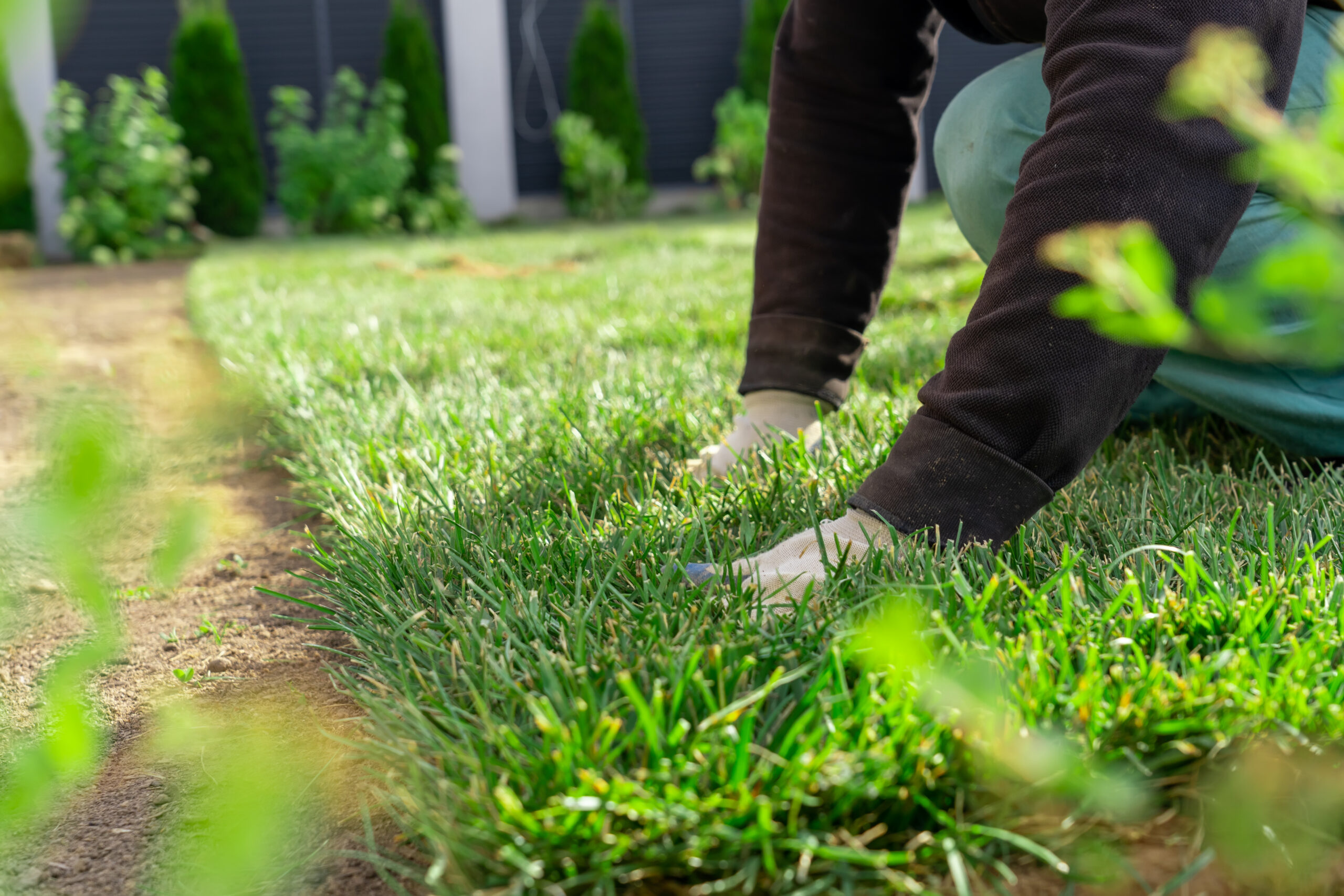
View of unrecognizable gardener fixing sod on field of backyard. Worker laying roll lawn in the garden.
View of unrecognizable gardener fixing sod on field of backyard. Worker laying roll lawn in the garden.
Sod vs. Seed at a Glance
You can get a great lawn from either sod or seed in clay soil, but each path suits different goals. Here is the quick comparison most homeowners want.
- Sod is best when you need instant cover, have slopes that erode, or want fewer weeds from the start.
- Seed is best when budget is tight, timing is ideal, and you can commit to watering and patience.
- Sod costs more up front but saves time and reduces mud and erosion quickly.
- Seed costs less but takes longer to establish and can be sensitive to weather swings.
- Both require strong soil prep in clay. The prep often matters more than the method.
Pros and Cons of Sod in Clay Soil
Advantages of Sod
- Instant coverage that controls erosion on slopes and bare spots.
- Lower weed pressure at the start since sod arrives as a dense, mature turf layer.
- Fast usability. With good watering, roots start to knit into the soil in 10 to 14 days.
- Uniform look from day one with consistent color and density.
- Best option if you have events, kids, or pets and want a yard that looks finished quickly.
- More forgiving of minor timing issues. You can install sod through much of the growing season if you water correctly.
Potential Drawbacks of Sod
- Higher initial cost for materials and labor.
- Risk of poor rooting if you skip soil prep or place sod on compacted clay.
- Limited variety at times. You get great turf, but not always as many options as seeding for specialty blends.
- Must keep sod moist from day one, which means careful irrigation planning.
Pros and Cons of Seeding in Clay Soil
Advantages of Seed
- Lower cost per square foot, especially for large areas.
- Wider choice of grass blends to match sun, shade, traffic, and local conditions.
- Deep rooting potential over time if prep is solid and compaction is managed.
- Easy to patch, adjust, and overseed as the lawn matures.
Potential Drawbacks of Seed
- Longer time to establish. You will wait weeks for coverage and months for maturity.
- Higher weed pressure early on, especially in disturbed clay soil.
- More vulnerable to washouts and crusting after heavy rain.
- Narrow timing window. Early fall is best, with spring as a second choice. Summer seeding is risky.
- Requires steady watering and protection from foot traffic.
True Cost Comparison in Clay Soil
Costs vary by region, slope, access, and the amount of soil work needed. As a general guide, professionally installed sod often ranges from 2 to 6 dollars per square foot depending on prep, while professional seeding might run from 0.20 to 1.50 dollars per square foot. DIY can bring costs down, but the quality of the result often traces back to how well you address clay soil challenges before installing.
Where the Costs Hide
- Soil testing, grading, and amendments like compost or topsoil.
- Core aeration or deep tilling to break compaction.
- Drainage fixes such as swales or subsurface solutions in persistent wet areas.
- Irrigation setup or hose and sprinkler upgrades to deliver even coverage.
- Follow-up services like overseeding, fertilizer, and weed management.
Many homeowners compare only the turf material price, but the real budget lives in the prep. Reputable sod installation companies will walk you through the full picture. Poul’s Landscaping & Nursery builds a complete plan that shows soil work, access needs, and realistic watering expectations so you can choose with confidence.
Timelines and Best Seasons
For clay soil lawns in the Midwest, timing helps the grass handle stress while roots build strength.
- Sod timeline: Install spring through early fall. Rooting usually begins within 1 to 2 weeks. Light use can start at 3 to 4 weeks. Heavier play and pets are safer at 6 to 8 weeks when roots are deeper.
- Seed timeline: Early fall is ideal. Cool nights and warm days help germination and root growth. Spring can work but may face more weeds and summer heat. Expect 3 to 4 weeks to see cover, 8 to 12 weeks for moderate use, and a full season for a mature lawn.
If you have a firm deadline or an event, sod wins on speed. If you can plan ahead and stay patient, seed remains a smart budget choice, especially if you pair it with strong soil prep and reliable watering.
The Secret Is in the Prep: Make Clay Soil Ready
No matter which path you choose, prepping clay soil sets the stage for a healthy lawn. Here is a proven step-by-step approach used by experienced sod installation companies.
- Test the soil. Check pH and organic matter. A simple test guides lime or sulfur needs and the amount of compost to add.
- Remove weeds and debris. Clear old turf, roots, stones, and construction leftovers.
- Rough grade. Shape the site for drainage that moves water away from your home.
- Break compaction. Core aerate heavily or till 4 to 6 inches deep to open the subsoil.
- Blend in organic matter. Work in 1 to 2 inches of high-quality compost. This improves structure, water movement, and microbial life.
- Add topsoil if needed. Where clay is extreme or elevation must rise, blend 2 to 4 inches of screened topsoil with the loosened clay rather than layering a separate cap.
- Fine grade and firm. Lightly roll or heel in the surface so it is firm underfoot but not compacted. Smooth out low spots.
- Check irrigation coverage. Run sprinklers and confirm even reach, then fix gaps or overlaps.
- Install sod or seed. For sod, stagger seams and press edges tight. For seed, use a starter fertilizer, broadcast seed evenly, and lightly rake for soil contact.
- Mulch and water. Use a thin straw mulch over seed. Start deep and frequent watering for both methods, then taper as roots grow.
Should You Add Sand to Clay?
Adding a small amount of sand to clay often makes things worse. It can create a hard, brick-like texture. If you want to change texture, you need a high volume of coarse material blended deeply, which is rarely practical. In most yards, compost is the better path to improved structure. Gypsum can help sodic clays, but those are uncommon here. Poul’s Landscaping & Nursery will test your soil first so you invest in amendments that work for your site.
How Sod Installation Companies Handle Clay Challenges
Top sod installation companies rely on repeatable systems so the lawn takes hold quickly. When Poul’s Landscaping & Nursery prepares a clay soil yard, the goal is long-term health, not just a quick green surface.
- Site assessment. Identify drainage patterns, shade, traffic, and irrigation options.
- Mechanical relief. Core aeration or deep tilling to reduce compaction and improve infiltration.
- Amendment strategy. Compost to boost organic matter, plus targeted lime or nutrients based on a soil test.
- Smart grading. Shape the surface so water flows evenly without pooling.
- Right grass selection. Match sod or seed varieties to your sun, soil, and use patterns.
- Watering plan. Set up a clear schedule for the first 4 to 6 weeks and adjust for weather.
- Follow-through. Post-install checkups to correct small issues before they become big ones.
This is why many homeowners prefer working with professional sod installation companies instead of juggling rentals, deliveries, and guesswork. The process is faster and the results are more predictable.
Maintenance After Installation
Watering Schedules
- Sod weeks 1 to 2: Keep the sod and top inch of soil consistently moist. Water daily or twice daily in heat to prevent edges from drying.
- Sod weeks 3 to 4: Shift to deeper, less frequent watering to train roots downward.
- Seed weeks 1 to 3: Keep the seedbed lightly moist at all times. Several short waterings each day may be needed in warm, windy weather.
- Seed weeks 4 to 8: Water more deeply but less often to drive roots deeper.
Mowing and Feeding
- First mow sod when it reaches 3 to 4 inches and the turf resists a gentle tug.
- First mow seed when most seedlings are 3 to 4 inches. Use a sharp blade and remove no more than one third of the height.
- Use a starter fertilizer at install, then feed lightly again 4 to 6 weeks later. Follow soil test guidance to avoid overfeeding.
Traffic and Pets
- Sod can handle light foot traffic after 3 to 4 weeks and normal use at 6 to 8 weeks.
- Seeded areas need more time. Keep traffic off for at least 4 to 6 weeks and increase use gradually.
Common Mistakes to Avoid in Clay Soil Lawns
- Skipping soil prep and laying sod on compacted clay.
- Seeding right before a major storm that can wash seed away.
- Overwatering to the point of puddling or underwatering during heat spells.
- Adding a thin layer of topsoil over clay without blending, which can cause a perched water table.
- Using the wrong grass type for your light and traffic conditions.
- Cutting too short in the first month, which stresses new roots.
Which Is Best for Your Yard? Real-World Scenarios
- New construction on heavy clay with tight deadline: Sod. You get instant cover, less mud, and fewer weeds.
- Shady yard with patchy history: Seed. Choose a shade-tolerant blend and commit to strong prep and slow establishment.
- Steep slope that keeps washing out: Sod. The mat holds soil in place and anchors quickly.
- Busy family with pets who need the yard soon: Sod. Faster rooting and fewer bare patches.
- Budget-first approach with flexible timing: Seed. Invest savings into soil improvements your lawn will benefit from for years.
- Limited irrigation or water restrictions: Sod with a strict watering plan, or delay until fall for cooler weather and lower water demand.
Why Choose Poul’s Landscaping & Nursery
Poul’s Landscaping & Nursery has been helping Chicago-area homeowners grow beautiful lawns and landscapes since 1966. Founded by Paul Kjeldbjerg after his move from Denmark, the company started with one truck, a trailer, and a commitment to craftsmanship. The team grew alongside the family. Paul’s oldest son, Dan, brought a marketing perspective in 1986, while his youngest son, Alan, added horticulture expertise in 1993. Over the decades Poul’s invested in nursery acreage in Long Grove and Wadsworth to grow quality plant material, manage supply, and maintain high standards from the field to your yard.
That history matters when you are weighing sod vs. seed in clay soil. Experience shows that prep is everything, timing is strategic, and the right grass blend will make or break the result. Poul’s Landscaping & Nursery designs each lawn plan around your soil test, grading needs, drainage goals, and lifestyle. Beyond turf, the team can support your entire landscape with seasonal color, plant health care, hardscaping, lighting, holiday lighting, and ongoing maintenance. One trusted partner. One high bar for quality.
If you have been searching for sod installation companies that understand local clay, Poul’s will meet you where you are. Whether you want a fast sod makeover or a patient, budget-wise seeding plan, you will get clear steps, fair costs, and a lawn that is built to last.
Get a Personalized Plan and Quote
Still unsure whether sod or seed is right for your clay soil lawn? That is normal. The smartest move is to start with a quick site evaluation. Poul’s Landscaping & Nursery will look at your soil, slope, sun, and budget, then outline a plan with exact steps and a realistic timeline. You will see how much prep your yard needs, what it will cost, and what to expect during the first season.
Here is what happens next when you reach out:
- Schedule a visit. A friendly pro walks your property and notes your goals.
- Receive a custom proposal. It includes prep, sod or seed recommendations, and a watering plan.
- Choose your path. Pick the option that fits your timeline and budget.
- Get it done right. The crew preps thoroughly, installs carefully, and follows up to ensure success.
Clay soil does not have to equal a hard, bumpy lawn. With the right prep and a method matched to your needs, you can enjoy a thick, green yard that drains well and stands up to real life. Among local sod installation companies, Poul’s Landscaping & Nursery brings the depth of experience and nursery resources to do it once and do it right. Contact the team today to compare sod vs. seed for your property and take the first step toward a lawn you will love all season long.
