
Lawn Always Muddy? How to Fix Yard Drainage
Lawn Always Muddy? How to Fix Yard Drainage

Why Your Yard Stays Wet and What to Do About It
If your lawn squishes underfoot or puddles linger for days after a storm, you are dealing with a drainage problem. Poor grading, compacted clay soil, clogged gutters, or a high water table can all send water where it does not belong. The good news is that you can stop the mess with the right plan. This guide breaks down how backyard drainage systems work, simple fixes you can try, when to bring in a pro, and what projects usually cost. At Poul’s Landscaping & Nursery, our team designs custom solutions that dry out soggy yards while protecting foundations and landscapes across northern Illinois.
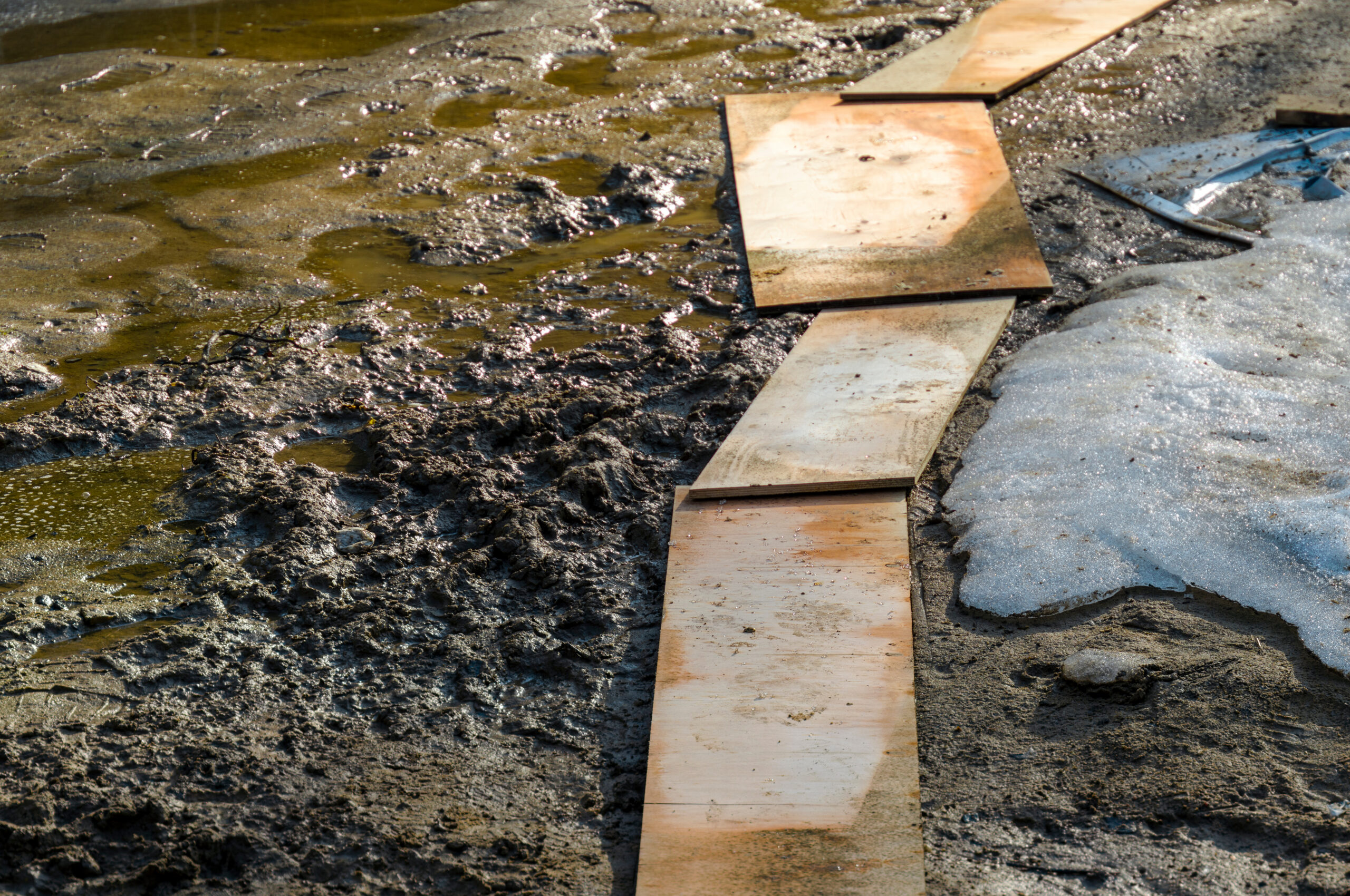
temporally arranged pathway
a temporally arranged pathway in a muddy yard, springtime outdoor shot
Common Signs Your Yard Needs Better Drainage
- Standing water or shiny low spots that last more than 24 to 48 hours
- Spongy turf that tears easily when you walk or mow
- Moss, algae, or mildew on shaded patches
- Mulch washing onto walks or driveways
- Water in basement window wells or seepage along the foundation
- Thin, yellowing grass in channels where water flows
- Ice sheets in winter from repeated freeze and thaw
Backyard drainage systems address the source rather than just hiding symptoms. The first step is to find where the water comes from and where it should go safely.
Why Fixing Drainage Matters
Water does not just make a mess. It can damage your home and landscape. Persistent moisture weakens roots, invites pests, and causes turf disease. Near the house, pooling water increases foundation pressure, can seep into basements, and may lead to cracks or mold. On patios and walks, freeze-thaw cycles turn puddles into slippery ice. Quality backyard drainage systems move water away from structures, protect your investment, and make your outdoor space usable year round.
How Backyard Drainage Systems Work
Every yard is unique, but the goal is the same. Capture water at the source, move it through a controlled path, and release it in a safe spot where it can soak in or tie into an approved outlet. The best systems combine surface grading with underground piping and strategic features that fit your property. Poul’s Landscaping & Nursery designs systems that balance performance with a clean look so your yard is both dry and beautiful.
Start With a Simple Site Check
- Walk your yard after rain to map puddles and flow paths.
- Check gutters and downspouts. Note any clogs, short extensions, or crushed pipes.
- Look for low or flat grades that slope toward the house.
- Probe the soil with a screwdriver. Hard resistance near the surface suggests compaction.
- Test infiltration. Dig a hole about 12 inches deep, fill it with water, and time how long it drains. If water lingers for hours, your soil drains poorly.
- Check where sump pump discharge goes. If it dumps near the foundation, reroute it.
This quick audit will help you choose the right mix of backyard drainage systems for your situation.
Quick Fixes You Can Try First
- Clean gutters and downspouts twice a year to prevent overflow.
- Add downspout extensions that carry water 6 to 10 feet from the foundation.
- Raise low soil against the foundation using well compacted fill, sloping away at least 1 inch per foot for 6 to 10 feet.
- Aerate compacted lawns to open soil and improve absorption.
- Topdress with compost to increase organic matter and water infiltration.
- Redirect sump discharge away from the house and neighbor’s property to an approved outlet.
If these steps help but do not solve the problem, it is time to consider more robust backyard drainage systems.
Proven Backyard Drainage Systems and When to Use Them
French Drain for Subsurface Water
A French drain is a perforated pipe set in a gravel trench that collects groundwater and channels it away. It is ideal for soggy lawns where water seems to rise from below or for intercepting flow across a slope. The trench is lined with fabric, filled with washed stone, and sometimes finished with turf or decorative gravel. Expect an outlet to daylight, a dry well, or a storm tie-in where permitted. Poul’s Landscaping & Nursery installs French drains that blend seamlessly into your yard while keeping the system accessible for future maintenance.
Catch Basins and Solid Pipe for Surface Runoff
Catch basins are grated inlets placed in low spots to grab surface water fast. Connected to solid PVC pipe, they move water to a safe discharge point. This setup works well for pooling around patios, driveways, and downspout clusters. We often combine basins with light regrading for best results.
Swales That Guide Water Naturally
A swale is a gentle, grassy channel that directs water by gravity. It is one of the most natural backyard drainage systems, especially effective on large lots or where a storm easement exists. Properly shaped and sodded, a swale looks like part of the lawn and is easy to mow. In high flow areas, we may use a turf reinforcement mat or stone lining to resist erosion.
Dry Wells to Store and Soak
A dry well is an underground chamber filled with stone or a modular unit that temporarily stores runoff and lets it soak into the soil. It pairs well with downspouts, sump discharge, or French drains where there is no surface outlet. Correct sizing and thoughtful placement are key, which is why a professional design is recommended.
Downspout Extensions and Underground Leaders
Downspouts should not dump water at the foundation. We install extensions or bury solid pipe to carry roof runoff to a swale, dry well, or approved storm line. Leaf filters and cleanouts keep the system flowing. This is one of the fastest ways to reduce basement moisture and lawn puddles near the house.
Permeable Patios and Driveways
Permeable paver systems allow rain to pass through joints into a prepared stone base, greatly reducing runoff. They are perfect around pools, patios, and driveways where you want hard surface function without constant puddles. Poul’s Landscaping & Nursery builds permeable hardscapes that look high end and meet local infiltration standards.
Channel Drains for Hard Surfaces
Across garage doors, at the foot of sloped patios, or between the house and a walk, a narrow channel drain captures sheet flow and connects to solid piping. It provides a neat, durable line of defense in tight spaces.
Rain Gardens for Beauty and Function
Rain gardens are shallow, planted basins that hold water briefly and let it soak in. Deep rooted native plants handle wet-dry cycles, add color, and support pollinators. In many backyards, a rain garden complements other backyard drainage systems and turns a problem spot into a highlight.
What Does Yard Drainage Cost
Every property is different, so think of these ranges as starting points. Soil type, access for equipment, landscape protection, and permits all affect price.
- Gutter and downspout tune up: $150 to $600
- Downspout extensions or buried leaders: $150 to $500 per downspout for basic extensions, $35 to $65 per foot installed for buried pipe
- Regrading near the foundation: $1,000 to $3,000 for typical sides or back
- French drain: $25 to $55 per linear foot installed
- Catch basin with solid pipe: $50 to $100 per linear foot installed
- Dry well: $1,500 to $4,000 depending on size and depth
- Swale shaping and stabilization: $1,000 to $5,000 based on length and finish
- Channel drain across a walk or drive: $70 to $120 per linear foot installed
- Permeable paver patio or walk: $18 to $35 per square foot installed
- Rain garden: $15 to $30 per square foot including plants and soil prep
- Sump discharge reroute: $500 to $2,500
Poul’s Landscaping & Nursery provides clear proposals with itemized options so you can choose the mix that fits your goals and budget.
DIY or Hire a Pro
Some drainage tasks are good DIY projects. Others require design, excavation skill, and knowledge of local codes. Use this guide to decide.
Good DIY Projects
- Cleaning gutters and adding basic downspout extensions
- Topdressing with compost and lawn aeration
- Small grading touch ups with a wheelbarrow and hand tools
- Simple rain gardens using native plants
Best Left to Pros
- French drains and any system that needs correct trench depth and slope
- Catch basins tied to underground pipe networks
- Dry wells that require proper sizing, stone volume, and overflow design
- Permeable paver installations and channel drains in concrete or pavers
- Regrading close to the foundation or near utilities
- Projects that may connect to municipal storm sewers or need permits
Poul’s Landscaping & Nursery has served homeowners since 1966 with seasoned crews, modern equipment, and a full nursery. From the first site walk to final cleanup, you will see why families across the North and Northwest Chicago suburbs trust our team.
Our Simple Process
- On-site assessment. We listen to your concerns, check grades, soil, gutters, downspouts, and sump discharge, and map water flow.
- Plan and estimate. You receive a clear design with options that fit your budget and timeline.
- Installation. Our crew protects existing landscapes, installs the system with correct slopes and materials, and handles any necessary permits.
- Finish and restore. We backfill, compact, and restore turf or hardscape so your yard looks clean and finished.
- Follow up. We explain maintenance and remain available for questions.
Because Poul’s Landscaping & Nursery operates its own nursery fields, we can also repair turf and plantings with high quality material right after drainage work is complete.
Design Tips That Make a Big Difference
- Think whole property. Solve upstream issues first so lower areas receive less water.
- Protect the foundation. Make sure the first 6 to 10 feet around your home slopes away and that roof and sump water cannot cycle back toward the house.
- Use cleanouts. Add access points in long pipe runs for easier maintenance.
- Plan for overflow. Every system needs a safe path for major storms.
- Blend function with beauty. Choose turf, stone, or plant finishes that match your landscape style.
- Respect neighbors and codes. Direct water to legal outlets and avoid sending runoff onto adjacent lots.
Maintenance Keeps Systems Working
Backyard drainage systems are low maintenance when built well, but they do need simple care.
- Clear leaves from grates and channel drains during fall and after big storms.
- Flush underground lines and basins every 1 to 3 years or as needed.
- Inspect downspout connections each spring.
- Top up gravel in exposed French drain bands if needed.
- Keep rain gardens weeded and mulched, and replace plants that struggle.
- Watch for settling after the first year and call us if you notice changes.
Why Choose Poul’s Landscaping & Nursery
Since 1966, Poul’s Landscaping & Nursery has helped homeowners across northern Illinois turn water problems into success stories. Our roots go back to founder Paul Kjeldbjerg, who learned the craft from one of the area’s original contractors and built a family business on care and craftsmanship. With our landscape office in Long Grove and nursery fields in Wadsworth, we bring decades of local knowledge to every project. Clay soils, spring storms, snowmelt, and freeze-thaw cycles are part of life here. We design backyard drainage systems that stand up to these conditions and protect your home. You get a friendly, trustworthy team that shows up, communicates clearly, and stands behind the work.
Frequently Asked Questions
How do I know which drainage solution I need
Start with a site check. If the problem is right at the downspout, extensions or buried leaders may fix it. If water seems to rise from the ground or flow across a slope, a French drain or swale helps. Puddles on hard surfaces call for channel drains. When there is no surface outlet, consider a dry well or rain garden. Poul’s Landscaping & Nursery can evaluate and recommend a smart mix.
Will a French drain fix every muddy lawn
No. A French drain is great for subsurface water and intercepting flow, but it works best with proper grading, gutter fixes, and a safe discharge. Many yards need a combination of solutions.
Can I direct water to the street
Rules vary by town. Some municipalities allow tie-ins to storm sewers with permits. Others require infiltration on site. We design systems that meet local codes and will handle permits if needed.
How long does installation take
Small projects like burying a few downspouts can take a day. Medium systems with basins and piping run two to three days. Larger projects with grading, French drains, and hardscape may take one to two weeks. Weather and site access can affect timelines.
Will drainage work damage my lawn
Any excavation disturbs turf. Poul’s Landscaping & Nursery protects the site, limits access paths, and restores lawn areas at the end. Because we operate our own nursery, we can quickly replace sod and plantings for a finished look.
Get a Drier, Healthier Yard
You do not have to live with a soggy lawn or a damp basement. With the right mix of grading, piping, and infiltration features, your property can shed water safely and look great doing it. If you are ready to solve puddles for good, reach out to Poul’s Landscaping & Nursery. Our team will listen, evaluate, and build a custom plan that fits your yard and budget. From simple downspout fixes to full backyard drainage systems, we make it easy to enjoy a drier, healthier outdoor space all season long.
