
Front Yard Trees That Won’t Lift Your Sidewalk
Front Yard Trees That Won’t Lift Your Sidewalk

Looking for the Best Tree to Grow in Front Yard Without Damaging Your Walk?
Best tree to grow in front yard? Discover curb-friendly trees that won’t lift your sidewalk, with tips and sizes. Choose smart and beautify your home, start now. If you have cracked or heaved sidewalks near large trees, you already know how costly the wrong choice can be. The good news is you can enjoy shade, flowers, and four-season curb appeal without risking your hardscape. The secret is picking the right species, giving roots enough room, and planting with care. This guide shares our top sidewalk-safe trees, how to choose the best tree to grow in front yard for your space, and pro tips from Poul’s Landscaping & Nursery to help you plant with confidence.
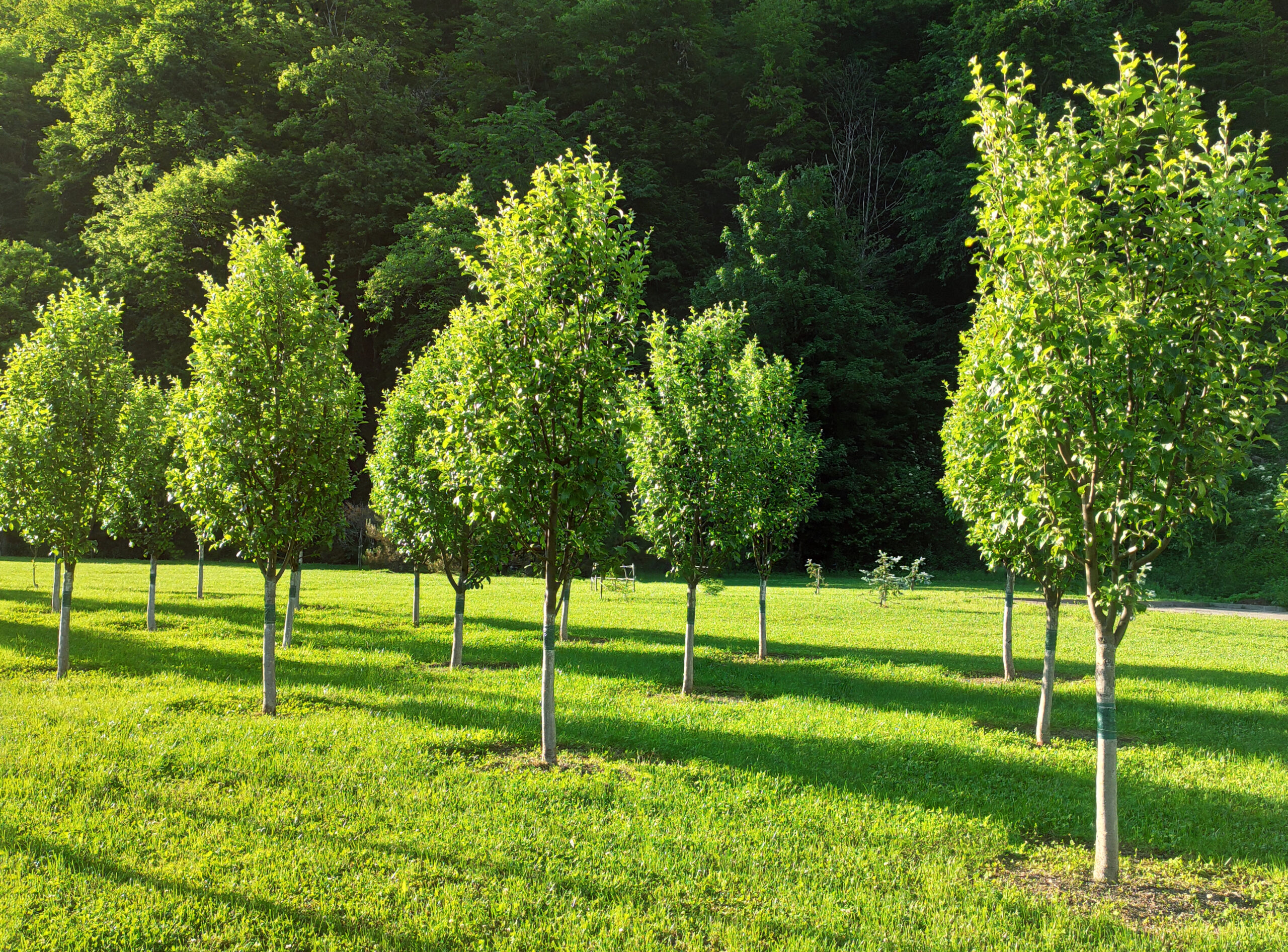
Rows of young trees in garden at sunny summer day
Rows of young trees in garden at sunny summer day
Why Do Some Trees Lift Sidewalks?
Sidewalk damage usually happens when roots grow near the surface and run out of room. Roots naturally move where air, water, and loose soil are easiest to find. In compacted, shallow parkways or narrow front beds, roots can creep under concrete slabs and push them upward. The risk increases with species that have fast, aggressive, or very shallow roots, poor soil preparation, and trees planted too close to the pavement.
How to Choose the Best Tree to Grow in Front Yard
Start with your space, sun, and soil. Small or medium trees with deep to moderate root systems are safer near sidewalks. Pick disease-resistant varieties adapted to your climate, and avoid fast-growing species with known surface roots. In Northern Illinois and much of the Upper Midwest, many front yards are in USDA Zones 4 to 6. The trees below thrive in these zones and are widely used in residential landscapes by Poul’s Landscaping & Nursery.
Quick Checklist Before You Buy
- Measure the planting area from the house to the sidewalk and to the street.
- Confirm sun exposure: full sun is 6 or more hours, part sun is 3 to 6 hours.
- Check for overhead wires, buried utilities, and sprinkler lines.
- Know your soil: does it drain well, stay wet, or get compacted?
- Match tree size to space at maturity, not the size in the pot today.
Safe Distances From Sidewalks
Planting distance matters as much as species. As a simple rule of thumb:
- Small trees under 25 feet tall: plant 5 to 8 feet from the sidewalk edge.
- Medium trees 25 to 40 feet tall: plant 8 to 12 feet from the sidewalk edge.
- Large trees over 40 feet tall: plant 12 to 20 feet from the sidewalk edge.
Give roots breathable soil and room to grow by creating a broad planting bed with composted mulch, not a small cutout in compacted turf. Poul’s Landscaping & Nursery can help you set the right distance for your lot and select soil amendments that reduce surface rooting.
Best Front Yard Trees That Stay Friendly to Sidewalks
Below are reliable choices for curb appeal, color, and structure that also tend to be kinder to hardscapes when given proper spacing. For each, we list typical mature size ranges and why they work near sidewalks. Local cultivar availability can change, and some varieties perform better in our region. Talk with Poul’s Landscaping & Nursery about the best tree to grow in front yard based on your exact site.
Small Ornamental Trees Under 25 Feet
These are ideal close to walkways and under power lines. They provide flowers, fruit for birds, and attractive fall color without the risk of massive roots.
- Serviceberry (Amelanchier x grandiflora, such as ‘Autumn Brilliance’) 15 to 25 feet tall, 10 to 20 feet wide. Four-season interest with white spring blooms, edible berries, glowing orange-red fall color, and smooth gray bark. Fine, fibrous roots are less likely to heave slabs when spaced correctly.
- Japanese Tree Lilac (Syringa reticulata) 20 to 30 feet tall, 15 to 25 feet wide. Creamy white flowers in early summer after most spring trees have finished. Tidy form, tough in urban sites, and roots are not typically aggressive.
- Kousa Dogwood (Cornus kousa) 15 to 25 feet tall, 15 to 25 feet wide. Starry white bracts in late spring, mottled bark, and great fall color. More heat and disease tolerant than some native dogwoods.
- Eastern Redbud (Cercis canadensis) 15 to 25 feet tall and wide. Pink blooms along bare branches in early spring and heart-shaped leaves through summer. Works well in part sun and looks great near entries.
- Disease-Resistant Crabapple (Malus cultivars like ‘Prairifire,’ ‘Sugar Tyme,’ or ‘Adams’) 12 to 20 feet tall and wide. Long-lasting flowers, glossy fruit for wildlife, and compact roots compared with large shade trees. Choose modern disease-resistant types to reduce leaf spot and scab.
- Star Magnolia (Magnolia stellata) 10 to 20 feet tall, 10 to 15 feet wide. Fragrant white blooms in early spring and a graceful habit. Good for small yards where a gentle root system is preferred.
Medium Trees 25 to 40 Feet
These provide more shade and structure while staying manageable near sidewalks when planted at proper distances.
- American Hornbeam, also called Musclewood (Carpinus caroliniana) 20 to 35 feet tall, 20 to 30 feet wide. Elegant, slow to moderate growth, with strong wood and fine roots. Excellent for dappled shade settings and naturalistic front landscapes.
- Ironwood, or Hop Hornbeam (Ostrya virginiana) 25 to 40 feet tall, 20 to 30 feet wide. Underused native with attractive catkins and good fall color. Roots are typically non-aggressive and the tree tolerates a range of soils.
- Paperbark Maple (Acer griseum) 20 to 30 feet tall, 15 to 25 feet wide. Cinnamon peeling bark, refined shape, and manageable size. A maple that behaves better around hardscape compared with large, fast maples.
- Zelkova ‘Wireless’ (Zelkova serrata ‘Wireless’) around 25 to 35 feet tall, 35 to 40 feet wide. Broader than tall with a calm root habit when established in good soil. Often used as a street tree where height limits are a concern. Allow adequate side space due to width.
- Black Gum, also called Tupelo (Nyssa sylvatica) 30 to 50 feet tall, 20 to 30 feet wide. Famous for brilliant red fall color and a deep central root when young. Best set farther from walks due to mature size, but roots tend to grow down rather than across when the soil is well prepared.
Narrow, Upright Choices for Tight Spots
If your front yard is narrow or you want a vertical accent, these columnar trees add height without sprawling roots near the surface.
- Columnar Hornbeam (Carpinus betulus ‘Frans Fontaine’ or ‘Pyramidalis’) 30 to 40 feet tall, 15 to 20 feet wide. Strong structure, refined leaves, and a small footprint. Works well as a living screen along property lines while keeping distance from pavement.
- Male Ginkgo, Upright Form (Ginkgo biloba ‘Princeton Sentry’) 40 to 50 feet tall, 15 to 20 feet wide. Fan-shaped leaves turn golden in fall. Deep root tendency and exceptional urban toughness. Always choose a named male cultivar to avoid fruit.
Best Trees Under Power Lines
When lines run above your parkway or near the front walk, choose low-maturing trees. These stay clear of wires and reduce pruning needs.
- Serviceberry
- Japanese Tree Lilac
- Eastern Redbud
- Dwarf or compact Crabapple cultivars
- Star Magnolia
Trees to Avoid Near Sidewalks
Some species are known for fast growth and very shallow or aggressive roots. Even at greater distances, they can raise slabs and crack curbs. Skip these if you want a low-risk front yard.
- Silver Maple and Norway Maple. Both can develop strong surface roots that heave pavement.
- Willows, Poplars, and Cottonwoods. Extremely fast growth with thirsty, invasive roots that seek water lines and weak points under sidewalks.
- Siberian Elm and other aggressive elms. Often brittle and invasive with lifting roots.
- Bradford or Callery Pear. Weak structure with storm breakage and problematic root systems.
- River Birch near hardscape. Attractive but often forms surface roots in compacted soils.
- Sweetgum in tight spaces. Can form surface roots and create maintenance issues.
Planting Tips That Keep Roots Where You Want Them
Prepare a Wide, Healthy Soil Bed
Loosen and enrich soil beyond the planting hole. A hole three times the width of the root ball encourages outward, even root growth. Blend compost into native soil to improve drainage and aeration. Healthy, well-aerated soil invites roots to grow down and out rather than up and under your sidewalk.
Set the Right Depth
Locate the root flare at or just above grade. Planting too deep suffocates roots and forces them upward in search of air. Remove extra soil from the top of containerized trees if the flare is buried.
Water on a Schedule
After planting, water slowly and deeply. During the first growing season, most new trees need a thorough soak once or twice per week depending on rain and soil. In hot spells, check moisture more often. A 2 to 3 inch layer of mulch outside the trunk keeps soil cool and moist. Keep mulch a few inches away from the bark to prevent rot.
Prune for Structure Early
Formative pruning by a professional in the first years builds strong branch angles and reduces breakage later. Good structure also reduces the need for aggressive pruning near sidewalks and streets as the tree matures.
Consider Root Barriers in Tight Spots
Physical root barriers can redirect shallow roots downward and away from hardscape. These are typically installed 18 to 24 inches deep along the sidewalk side of the planting area. Proper installation is key. Poul’s Landscaping & Nursery can design and install root guides that work with the tree’s natural growth.
Design Ideas for Instant Curb Appeal
Front yard trees do more than shade and privacy. With smart placement, they can frame your entry, anchor a planting bed, and boost home value. Try these simple ideas:
- Pair a small ornamental tree near the front walk with layered shrubs and perennials for four-season interest.
- Use two upright hornbeams to frame the driveway or front steps, then soften with low groundcovers.
- Choose a serviceberry by the porch where spring blooms and fall color shine from the street.
- Light your tree from below for subtle evening appeal and safe entry visibility.
What Makes Poul’s Landscaping & Nursery a Trusted Tree Partner
Poul’s Landscaping & Nursery has helped homeowners across Chicagoland choose the best tree to grow in front yard since 1966. Founded by Paul Kjeldbjerg after his move from Denmark, the company began with one truck and a big vision. The name honors the original Danish spelling of Paul’s first name. From a family basement office in Prospect Heights to a Long Grove farm and nursery, and later a 112 acre nursery in Wadsworth, Poul’s has grown by focusing on quality, plant health, and customer care. Today, the team blends deep horticultural knowledge with a full set of landscape services. Whether you need soil prep, tree selection, expert planting, seasonal color, lawn health programs, or even holiday lighting, Poul’s Landscaping & Nursery handles your front yard project from plan to perfect finish.
How to Pick the Right Tree for Your Exact Site
Even safe species can cause problems if the spot is too tight or the soil is poor. Here is a simple process our designers use to match the best tree to grow in front yard conditions:
- Measure and map. Record the width from house to sidewalk, from sidewalk to street, and the location of nearby driveways and stoops.
- Check utilities. Note overhead wires and call before you dig to mark underground lines.
- Assess sun and wind. Track sun hours and strong wind patterns that might affect branch structure.
- Test drainage. After a good soak, the hole should drain within 24 hours. If not, amend the soil or choose a tree that tolerates wet feet.
- Choose size first, species second. Eliminate trees that exceed your space at maturity to avoid conflicts later.
- Select a cultivar. Within a species, pick a cultivar with disease resistance, compact form, or better color suited to your goals.
- Set the planting distance. Use the spacing guidelines above to keep roots away from pavement.
Answers to Common Questions
Can any tree guarantee zero sidewalk damage?
No tree can offer a 100 percent guarantee. Still, small to medium trees with moderate or deeper root systems, planted at the right distance, greatly lower the risk. Soil prep, mulch, and steady watering also guide roots downward where they belong.
Are maples always a bad idea?
Not always. Fast, large maples like silver and Norway are poor near sidewalks. Compact, slower maples such as paperbark maple can work well when spaced correctly. If you love maples, talk with Poul’s Landscaping & Nursery about the right fit for your yard.
What if my front yard is very small?
Choose a compact tree under 20 feet tall, like star magnolia, serviceberry, or a dwarf crabapple. Plant at least 5 to 6 feet from the walk, use a generous mulch bed instead of turf right up to the trunk, and consider a root barrier for extra protection.
Is it better to plant in spring or fall?
Both seasons work well in the Upper Midwest. Spring gives a full season to establish roots before winter. Fall planting in cool soil reduces stress and often requires less water. Poul’s Landscaping & Nursery plants in both seasons and will advise based on your tree and schedule.
Make Your Curb Appeal Last
Choosing the best tree to grow in front yard is part art and part science. Start with species known for manageable roots, size them to your space, set the right distance from hardscape, and plant into healthy soil. With that foundation, you get shade, color, and structure without the headache of lifted sidewalks. If you want help selecting, sourcing, and installing a tree that fits your home and lifestyle, the team at Poul’s Landscaping & Nursery is ready. Since 1966, this family business has matched local yards with long-lived, beautiful trees from their own nursery fields and trusted growers. They can also maintain your landscape through the seasons with plant health care, bed enhancements, and festive lighting.
Get Started With a Tree You Will Love
Still wondering which is the best tree to grow in front yard for you? Schedule a design visit with Poul’s Landscaping & Nursery. We will review your site, suggest proven trees that will not lift your sidewalk, and plant them the right way. That means better roots, better health, and better curb appeal for years to come. Your perfect front yard starts with a smart choice today.
