
Is My Grass Dead or Just Dormant? How to Tell
Is My Grass Dead or Just Dormant? How to Tell

Dormant or Dead: What’s Really Going On With Your Lawn
Brown grass does not always mean your lawn is gone for good. Grass can turn brown during stress and go into dormancy to survive heat, drought, cold, or other pressures. When conditions improve, dormant grass wakes up and greens again. Dead grass will not recover because the growing point has died. Knowing the difference helps you choose the right fix, from simple watering to a complete lawn renovation.
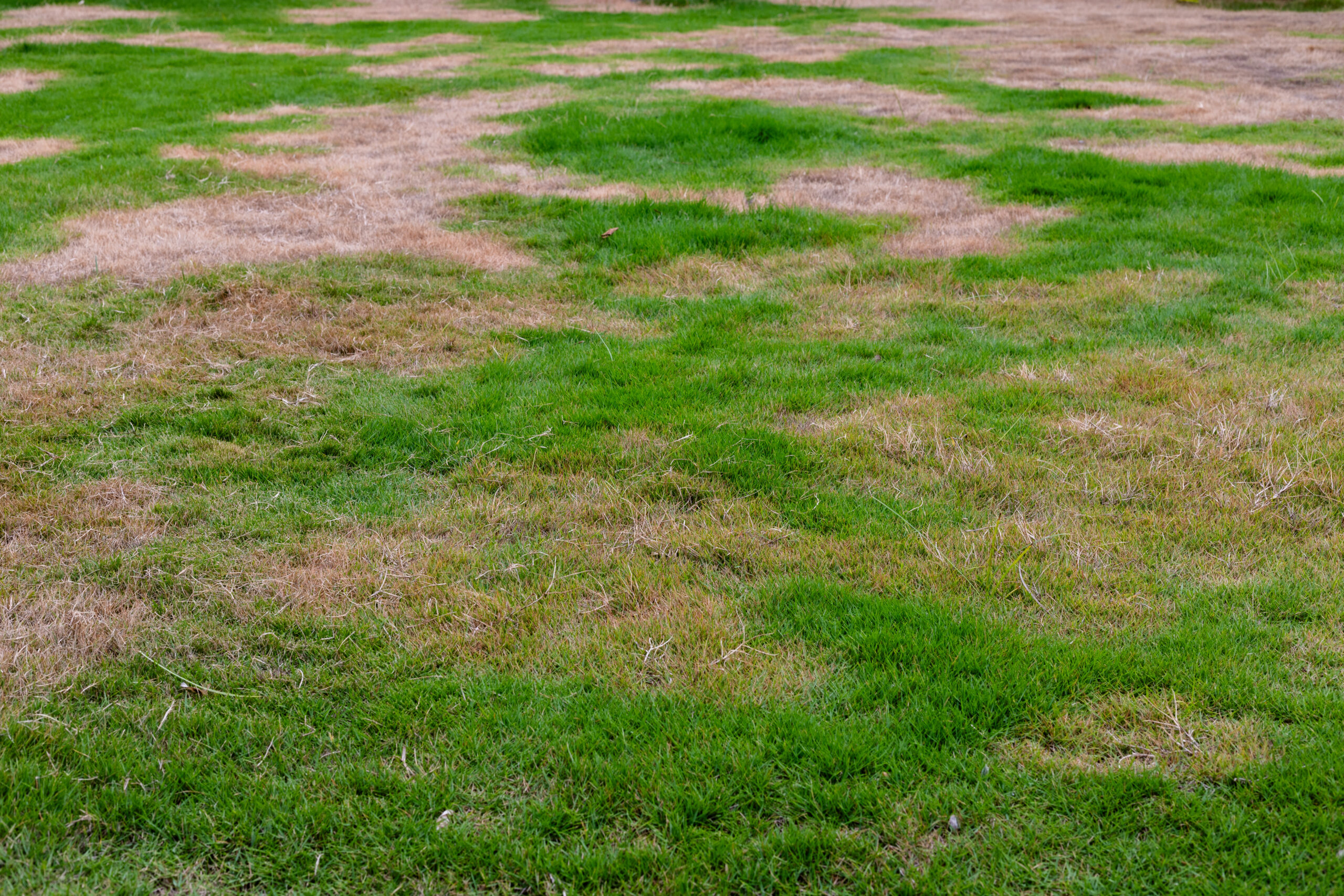
Patchy Lawn with Dry Brown Grass and Green Growth in Summer Heat
Patchy Lawn with Dry Brown Grass and Green Growth in Summer Heat
How Dormancy Works
Grass uses dormancy to save water and energy. In summer heat, cool-season lawns in the Midwest often go tan for several weeks if rain is scarce. In winter, those same grasses turn straw colored but bounce back in spring. Warm-season grasses have a different schedule and go dormant once temperatures drop.
Quick At-Home Tests
- Tug test: Gently pull a small handful. If blades come out easily with dry, brittle crowns and little to no roots, it is likely dead. If it resists with white roots attached, it is likely dormant.
- Crown check: Part the blades and look at the base. A living crown is firm and cream colored. A mushy, dark, or hollow crown is dead.
- Scratch test: Use your fingernail or a pocketknife to lightly scratch a stolon or stem. Green or white tissue underneath means it is alive. Brown and dry throughout means dead.
- Spot watering: Water a small area deeply every few days for two weeks. If color returns, it was dormancy or drought stress.
- Footprint test: Walk across the lawn. If footprints linger for minutes, the turf is drought stressed and possibly dormant. If blades spring back, it is likely hydrated and alive.
Season and Species Matter in Northern Illinois
In the Chicago and North Shore suburbs, most lawns are cool-season blends. Kentucky bluegrass, perennial ryegrass, and fescues are common. Understanding their calendar helps you read the signals.
Typical Dormancy Windows
- Spring: Rapid green-up if soil warms and moisture is steady. If brown areas persist past late May, test further.
- Summer: Dormancy can begin after two to three weeks without rain and temps above 85 degrees. Lawns can safely stay dormant six to eight weeks if crowns survive.
- Fall: Prime recovery time. If sections fail to green with cooler temps and rain, those spots may be dead or disease damaged.
- Winter: Straw color is normal dormancy. Snow mold may appear as matting and gray or pink patches but often recovers with light raking.
Sun, Shade, and Heat Pockets
South and west exposures, sloped areas, and turf near pavement may brown faster due to heat and reflected light. Deep shade may thin since most grasses need 4 or more hours of filtered sun. These patterns guide whether overseeding, sod, or complete lawn renovation is best.
Soil Health, Thatch, and Watering: The Root of the Problem
Even living grass will look poor if the soil below is compacted, too acidic or alkaline, starved of nutrients, or covered by thick thatch. A simple diagnosis goes a long way.
How to Check Soil and Thatch
- Probe test: Push a screwdriver into the lawn after normal watering. If it stops after an inch, compaction or thatch is high.
- Thatch ruler: Cut a small plug and measure the spongy brown layer between green blades and soil. More than half an inch can block water and fertilizer.
- Drainage look: After rain, puddles that linger beyond a day suggest poor grading or heavy clay.
- pH and nutrients: Send a soil test through a local lab or ask Poul’s Landscaping & Nursery. Cool-season turf likes a pH near 6.0 to 7.0. Low phosphorus or potassium can stunt roots and slow recovery.
Watering Basics for Recovery
- Deep and infrequent: Aim for 1 to 1.5 inches of water per week in the growing season, split into two or three soakings.
- Morning is best: Water between 5 and 9 a.m. to reduce disease risk and limit evaporation.
- Audit your system: Uneven coverage creates green stripes and brown gaps. Poul’s Landscaping & Nursery can check zones and heads.
Pests and Diseases That Mimic Dormancy
Sometimes what looks like dormancy is a pest or disease. Spot these clues early.
Common Midwestern Culprits
- White grubs: Brown patches that lift like a carpet, skunks or raccoons digging, and few roots. Treat and reseed or sod as needed.
- Chinch bugs: Wilting patches in sunny areas that do not respond to watering. Insects gather at the thatch line.
- Brown patch or dollar spot: Circular or smoky tan areas, often in humid weather. Improve airflow, water in the morning, and consider a fungicide plan.
- Necrotic ring spot: Frog-eye rings on Kentucky bluegrass. Cultural fixes like core aeration and overseeding with resistant varieties help.
- Snow mold: Matted turf in spring. Light rake to lift blades. Severe cases may need overseeding.
Is It Time for a Quick Fix or a Bigger Plan
Once you confirm what you are dealing with, choose a remedy that matches the scale of damage. Use these rules of thumb.
- Less than 10 percent thin or brown: Adjust watering, mow at 3 to 4 inches, and spot seed.
- 10 to 30 percent thin: Core aerate, overseed, and fertilize. Consider topdressing with compost.
- 30 to 50 percent thin or mixed grass quality: Slit-seed with improved varieties and address soil issues.
- More than 50 percent dead or full of weeds: Consider sod in key areas or plan a complete lawn renovation.
How to Overseed When Grass Is Still Alive
Overseeding is the go-to when the lawn is mostly alive but thin. Timing in Northern Illinois is best from late August through mid-September, with spring as a backup.
- Prepare the surface: Mow to 2 inches and bag clippings. Dethatch if needed.
- Core aerate: Two passes help seed reach soil and relieve compaction.
- Seed choice: Use a blend of Kentucky bluegrass and fescue for sun-shade mixes. For high-traffic areas, include turf-type tall fescue. Poul’s Landscaping & Nursery can match a custom mix to your site.
- Apply seed evenly: Use a broadcast spreader at the label rate. Lightly rake to ensure seed-soil contact.
- Topdress: A thin layer of screened compost or topsoil helps germination and levels minor bumps.
- Starter fertilizer: Apply a balanced starter high in phosphorus if your soil test allows.
- Water gently: Keep the top quarter inch moist until germination. Then reduce frequency and increase depth.
- Mow when ready: First cut at 3 inches when seedlings are 3.5 to 4 inches tall. Keep blades sharp.
When to Choose Sod
Sod offers instant coverage, perfect for high-visibility areas or erosion-prone slopes. It is also smart when a large section is dead but soil health is sound.
- Prep is still key: Remove dead turf and roots, grade smooth, and amend soil as needed.
- Tight seams: Stagger joints and roll to ensure contact.
- Water schedule: Short, frequent waterings for the first 10 days, then deeper sessions as roots anchor.
Complete Lawn Renovation: The Best Fresh Start
When weeds, poor varieties, and bare soil dominate, a complete lawn renovation delivers a clean slate. This process replaces tired turf with high-performance seed or sod and corrects the soil foundation. Poul’s Landscaping & Nursery has guided homeowners through complete lawn renovation projects across the North Shore and Northwest suburbs for decades.
Step-by-Step Complete Lawn Renovation
- Site evaluation: Map sun and shade, traffic, drainage, and irrigation coverage. Note tree roots and compacted zones.
- Soil testing: Check pH and nutrients. Plan lime or sulfur if pH is out of range. Add organic matter if soil is heavy or low in carbon.
- Weed clearing: Remove existing lawn with a non-residual herbicide or by sod cutting. Wait the recommended interval and water to flush any regrowth.
- Grading and drainage: Smooth low spots, fix water traps, and add swales or drains where needed.
- Amendments: Till in compost where practical. In tight clay, consider repeated core aeration and topdressing if tilling is not an option.
- Seed selection or sod choice: Select improved cultivars with disease resistance and the right sun-shade blend. Poul’s Landscaping & Nursery sources premium seed and sod for local conditions.
- Seeding method: Broadcast, then slit-seed for superior soil contact. Lightly rake the surface.
- Topdressing: Apply a quarter inch of compost to promote moisture retention and microbial life.
- Starter nutrition: Use a starter fertilizer per soil test. Avoid weed preventers that block seed germination.
- Rolling and watering: Lightly roll to set seed or sod. Water as a light mist 2 to 4 times daily at first, then shift to deeper, less frequent cycles.
- Aftercare plan: Set mowing height at 3 to 3.5 inches, sharpen blades, and avoid heavy traffic for the first month.
A thoughtful complete lawn renovation does more than refresh color. It builds a root-deep system ready for Midwest heat, cold, and foot traffic.
Renovation Timing and Germination Expectations
Target late summer into early fall for best results. Soil is warm, air is cooler, and weeds slow down. Here is what to expect from common seeds.
- Perennial ryegrass: 5 to 7 days to sprout. Fast cover, great for overseeding.
- Kentucky bluegrass: 10 to 21 days. Spreads via rhizomes for long-term density.
- Tall fescue: 7 to 14 days. Deep roots and strong heat tolerance.
Be patient during establishment. Consistent moisture and correct mowing matter more than rushing growth.
Watering, Mowing, and Feeding After a Renovation
Watering Schedule
- Weeks 1 to 2: Mist lightly 2 to 4 times per day to keep the surface damp, not soggy.
- Weeks 3 to 4: Water once daily, deeper, to reach the root zone.
- Weeks 5 and beyond: Shift to 1 to 1.5 inches per week, split into two or three deep waterings.
Mowing and Fertilizer
- Mow high: Keep blades at 3 to 4 inches. Never remove more than one third at a time.
- Feed smart: Apply a light follow-up fertilizer about 4 to 6 weeks after seeding or sod placement, guided by your soil test.
- Weed control: Skip pre-emergents until the new lawn has been mowed at least three times. Use spot treatments as needed.
Prevent Brown Patches Next Season
Healthy turf crowds out weeds and tolerates stress. A few simple habits go a long way.
- Core aeration each fall. In heavy clay, consider spring as well.
- Topdress with compost to boost soil life and structure.
- Balanced fertility with slow-release nitrogen and the right potassium levels for stress resistance.
- Sharpen mower blades and mow high to shade soil.
- Calibrate sprinklers and fix leaks for even coverage.
- Mulch tree rings so grass does not compete with large roots in deep shade.
Frequently Asked Questions
How long can cool-season grass stay dormant in summer?
Often six to eight weeks if crowns and roots survive. A light weekly watering of a half inch can keep crowns alive during long dry spells.
Can I revive dead grass with water and fertilizer?
No. If the crown is dead, the plant cannot regrow. Reseeding or sodding is required, or consider a complete lawn renovation if dead patches are widespread.
Will pre-emergent stop my new seed from growing?
Yes, most will. Use starter fertilizers designed for seeding or delay pre-emergent until after three mowings. Poul’s Landscaping & Nursery can set a safe schedule.
Is dethatching always necessary?
No. If thatch is under half an inch, focus on core aeration and soil health. Dethatch only when that layer blocks water and nutrients.
Do I need a soil test before a complete lawn renovation?
It is strongly recommended. A soil test prevents guesswork and targets pH and nutrient fixes that make your renovation last.
Why Homeowners Trust Poul’s Landscaping & Nursery
Poul’s Landscaping & Nursery has been transforming lawns and landscapes since 1966. Founded by Paul Kjeldbjerg after he emigrated from Denmark, the company grew from a pickup truck and a trailer into a trusted local team with deep nursery roots. In the 1980s and 1990s, the family expanded operations to Long Grove and Wadsworth, where wholesale nursery fields still support the highest quality plant material. Today, our designers, horticulturists, and crews bring that legacy to every project.
From simple tune-ups to complete lawn renovation, Poul’s Landscaping & Nursery combines practical diagnostics with premium materials and proven methods. We match seed blends to your sun and soil, fix grading and drainage problems, correct irrigation coverage, and set clear aftercare steps so your lawn thrives beyond the first season. You can also count on us for seasonal color, plantings, garden care, and even holiday lighting to keep your property beautiful year round.
Your Next Steps
If you are still asking whether your grass is dead or just dormant, start with the quick tests in this guide. Note your sun and shade, look under the crowns, and water a test patch. If you see signs of life, plan an overseed and address soil issues. If large areas are gone or the lawn is full of weak varieties and weeds, a complete lawn renovation may be the smarter long-term investment.
Ready for a professional eye and a plan you can trust? Connect with Poul’s Landscaping & Nursery. We will evaluate your site, confirm what is dormant versus dead, and recommend the right solution. Whether that is fine-tuning your watering, slit-seeding with improved cultivars, rolling out fresh sod, or guiding a full and thoughtful complete lawn renovation, our team will help you recover a lawn you are proud to enjoy.
