
Why Grass Won’t Grow Under Trees
Why Grass Won’t Grow Under Trees

Why Grass Won’t Grow Under Trees
Grass not growing under trees can be one of the most discouraging lawn problems. You water, fertilize, and seed, yet thin patches return each year. Shade, thirsty roots, and tough soil conditions all play a part, but there are smart ways to work with nature and get better results. In this guide, the team at Poul’s Landscaping & Nursery explains why lawns struggle near trees and how you can restore beauty with the right plan, whether that means a stronger lawn, a mix of lawn and groundcovers, or a fresh design that fits your yard’s light and soil.
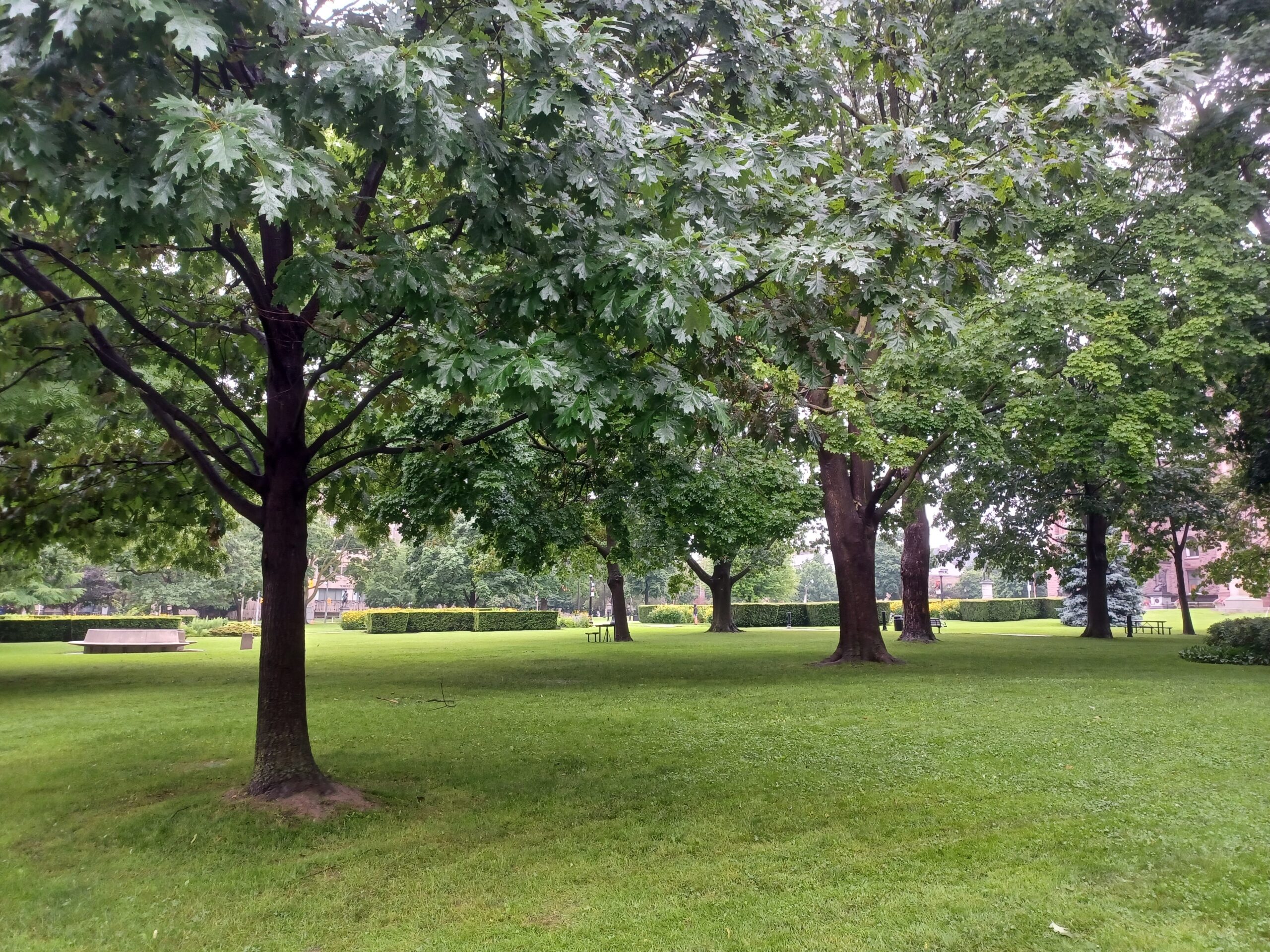
Green city park sunny afternoon
The real reasons grass struggles under trees
Shade lowers the light below what turf needs
All turf grasses need light to build energy. Under a dense canopy, the light level can drop below the minimum needed for growth. Even shade tolerant grasses need several hours of filtered light. If your trees cast deep shade most of the day, new seedlings cannot establish and mature blades thin out. The result looks like grass not growing under trees when in reality it is simply a lack of energy for the lawn to recover from routine stress.
Tree roots compete for water and nutrients
Tree roots extend far beyond the trunk, often two or three times the spread of the canopy. Many roots are near the surface where lawn roots live. In dry spells, trees win the race for moisture, and the lawn wilts or goes dormant. Fertilizer is also captured by trees first, which leaves turf underfed. This constant competition is a major reason you see grass fail closest to the trunk and do a little better further out.
Canopies keep rain from reaching the soil
Wide branches act like umbrellas that shed rain beyond the dripline. That means less water reaches the lawn directly under the tree, especially during light showers. When the soil stays dry while surrounding areas get enough moisture, turf under trees falls behind, even with decent shade tolerance.
Soil compaction and a thin topsoil layer
Foot traffic, mowers, and even pets compact the soil around trees. Compacted soil has fewer air pockets and resists root growth. It also sheds water instead of soaking it in. In many suburban lots, there is a thin layer of topsoil over dense subsoil. Grass roots struggle in these conditions, particularly when competing with the extensive feeder roots of a mature tree.
pH drift, leaf litter, and myths about allelopathy
Years of leaf litter can change the soil slightly at the surface, but the main issue is the layer of leaves that blocks light and traps moisture. Many people believe pine needles or walnuts make the soil too acidic for lawns. While black walnut produces a compound called juglone that can affect some plants, most turf grasses tolerate it. The real culprits are shade, dry soil, and compaction. Soil pH can still drift outside the ideal range, so a soil test is always wise before making big changes.
Mowing height and edge stress
Short mowing near tree flares stresses grass even more. If mower wheels ride high on surface roots, blades cut too short in those spots. Combined with shade, those scalped patches become bare. Trimmer string also scars roots and trunk flares, making conditions harsher for turf and the tree.
Tree species that make lawns more difficult
Some trees cast deeper shade or have more competitive roots than others. While any tree can reduce turf vigor, these often cause more trouble:
- Norway maple and silver maple with dense shade and shallow roots
- Spruce and fir with lower branches that block light and a dry, needle-covered surface
- Pine, especially mature stands that intercept rain and create dry soil
- Beech and lindens with tight canopies
- Oak with broad shade and strong competition for moisture
- Black walnut, which can make planting choices more limited for some companion plants
If you see grass not growing under trees like these, you will likely need a mix of changes to make progress.
How to diagnose your specific site
A few simple checks will tell you why your lawn is thin and which solutions will help most.
- Map your sun. Note how many hours of direct and filtered light reach the area in spring, summer, and fall. Full shade areas with fewer than 3 hours of filtered light will be tough for most turf.
- Test the soil. Check pH and nutrient levels so you can adjust them properly. Poul’s Landscaping & Nursery can arrange soil testing and explain the results in plain language.
- Probe for compaction. Push a screwdriver or soil probe into the ground after a rain. If it is hard to insert more than a few inches, compaction is a problem.
- Check moisture. During a dry spell, dig 3 to 4 inches down. If the soil is powder dry while open areas are moist, canopy interception and root competition are at play.
- Look for surface roots. If roots protrude at the surface, plan to raise mowing height and add a mulch ring to protect them.
- Consider traffic patterns. Footpaths to gates or sheds compress soil and thin grass further.
Proven fixes that actually work
There is no single silver bullet, but a combination of these steps will dramatically improve lawn health under trees. Start with the easy changes, then work up to bigger updates if needed.
- Raise the mowing height. Set the mower to cut at 3.5 to 4 inches under trees. Taller blades capture more light and shade the soil surface, helping retain moisture.
- Water deeply and less often. Use a soaker hose or low-flow sprinkler under the canopy. Water to moisten the top 6 inches of soil. Early morning is best. Avoid shallow daily watering.
- Leaf and needle management. Mulch mow thin layers of leaves during fall, but remove or compost heavy layers. Do not let a mat of leaves block light for weeks.
- Core aeration and topdressing. Aerate gently outside the immediate root flare to relieve compaction. Follow with a quarter inch of screened compost. This improves soil structure without harming roots. Poul’s Landscaping & Nursery uses methods that respect tree health while improving turf conditions.
- Adjust soil pH and nutrients. Based on your soil test, add lime or sulfur as needed and apply a balanced, slow-release fertilizer at light rates. Avoid heavy nitrogen under deep shade, which can promote disease.
- Overseed with shade-tolerant grasses. In cool climates, fine fescues such as creeping red, chewings, and hard fescue excel in shade. Tall fescue holds up well in moderate shade and foot traffic. In very shady, moist areas, supina bluegrass can be an option. In warm climates, St. Augustine and certain zoysia types handle filtered shade better than bermuda. Poul’s Landscaping & Nursery can recommend blends that suit Chicagoland conditions.
- Time your seeding right. Early fall is best for cool-season lawns. The soil is warm, the air is cooler, and trees drop some leaves that can be mulched lightly to protect seedlings. Spring can work if you water consistently.
- Thin the canopy carefully. Selective pruning can allow dappled light without stressing the tree. Never top a tree. Work with a certified arborist to remove a few strategic branches. Poul’s Landscaping & Nursery can coordinate with trusted arborists.
- Protect the root flare with mulch. Create a wide, defined mulch ring around the trunk to keep mowers and trimmers away. Two to three inches of natural mulch is enough. Keep mulch off the trunk itself.
- Rethink the planting plan where shade is too deep. In areas with fewer than 3 hours of filtered light, switch from lawn to shade-loving groundcovers or a designed mulch bed with accent plants. This creates a healthy, beautiful space rather than a constant struggle.
Shade-friendly alternatives to turf under trees
If light is very limited, a layered planting can look richer than sparse turf. Here are reliable options Poul’s Landscaping & Nursery often uses in local landscapes.
- Sedges and lawn-like covers: Pennsylvania sedge, woodland sedge, and liriope form soft, low mats in shade. They mimic a lawn look with less upkeep.
- Classic groundcovers: Pachysandra, vinca minor, and sweet woodruff fill in evenly under trees. Choose noninvasive varieties and keep them edged for a tidy outline.
- Native and ornamental perennials: Hosta, epimedium, wild ginger, Solomon’s seal, hellebores, and ferns thrive in shade and add texture.
- Flowering accents for dappled light: Astilbe, lamium, brunnera, and columbine provide blooms and color in spring and early summer.
- Moss gardens in cool, consistently moist shade: If your soil tends to stay moist and acidic, a moss carpet can be magical. Keep foot traffic low.
Design ideas to make tree bases beautiful
A thoughtful design can turn problem spots into highlights.
- Wide mulch basins with stone or steel edging to separate lawn and tree roots cleanly
- Meandering stepping stones through shade to reduce foot traffic on delicate areas
- Tiered plantings with low groundcovers near the trunk and taller shade perennials further out
- A circular bench or small seating area under a broad canopy, with permeable gravel and accent plants
- Seasonal color pockets using containers or clustered shade annuals like impatiens and begonias
Seasonal care checklist for success
Follow this simple calendar to keep lawn and plantings strong under trees.
- Early spring: Soil test, edge the mulch ring, apply a light, balanced fertilizer if needed. Spot seed bare areas as temperatures warm.
- Late spring to summer: Water deeply once or twice per week based on rainfall. Mow high. Remove heavy leaf or needle buildup as needed.
- Late summer to early fall: Core aerate and topdress. Overseed with shade blends. Keep the seedbed moist until germination and early establishment.
- Fall: Mulch mow thin layers of leaves. Remove heavy mats. Plant shade perennials and groundcovers while soil is still warm.
- Winter: Plan canopy thinning with an arborist if needed. Review what worked and adjust seed mixes or plant choices for next season.
Frequently asked questions about grass not growing under trees
How many hours of light do shade-tolerant grasses need?
Most shade-tolerant cool-season grasses need 3 to 4 hours of filtered light or 2 to 3 hours of direct morning sun. If your site does not meet that, lawn alternatives will perform better long term.
Will pruning branches fix the problem?
Selective thinning can help, but over-pruning can harm the tree and will not add much light if the canopy remains dense overall. Pair light pruning with soil improvement, watering, and the right grass mix for best results.
Is sod a good shortcut under trees?
Sod can provide instant cover, but if conditions have not improved, it will thin just like seed. Prepare the soil, solve compaction and moisture issues, then lay shade-rated sod. Water carefully until roots knit into the soil.
How wide should the mulch ring be around the trunk?
Expand mulch to at least the spread of the lowest branches if you can, or a minimum of 2 to 3 feet from the trunk. More is better for both tree health and reduced mower damage.
Do pine needles make the soil too acidic for grass?
Not usually. Pine needles have a minor effect on soil pH. Shade, dryness, and compaction matter far more. A soil test will tell you if pH adjustment is needed.
Can I grow a thick lawn under mature spruce?
Spruce often create some of the toughest conditions. Many homeowners switch to a mulch bed with groundcovers and accents under large spruce. This approach looks neat and reduces ongoing frustration.
Why choose Poul’s Landscaping & Nursery
Local expertise since 1966
Poul’s Landscaping & Nursery has helped Chicagoland homeowners solve shade and tree root challenges for decades. The company began in 1966 when Paul, known as Poul in Danish, started with a pick-up truck, a trailer, and a big vision. From a Prospect Heights basement office to our Long Grove farm and Wadsworth nursery fields, our family business has grown with a focus on craftsmanship and practical solutions. Today, our team blends horticulture knowledge with friendly service to deliver results you can see season after season.
Services tailored to fix grass not growing under trees
- Site evaluation that maps sun patterns, soil conditions, and tree root zones
- Soil testing with clear recommendations for pH and nutrients
- Core aeration and compost topdressing that respect tree health
- Overseeding with premium shade-tolerant blends suited to our region
- Mulch ring design and installation to protect trunks and improve appearance
- Groundcover and shade garden installations that look full and natural
- Irrigation adjustments or low-flow options under canopies
- Coordination with certified arborists for selective canopy thinning
Whether you want to keep a lawn thriving under your favorite oak or redesign the entire area into a beautiful shade garden, Poul’s Landscaping & Nursery can guide you from plan to finish. Our nursery resources and field-grown plant material help ensure strong starts and long-term success.
Start today with a practical plan
If you are tired of seeing grass not growing under trees, begin with a simple assessment. Count your hours of light, check moisture, and note where compaction is worst. Then decide whether to boost the lawn with better care and seed or to switch part of the area to groundcovers and mulch. Poul’s Landscaping & Nursery can visit, measure, test, and create a step-by-step plan that fits your budget and timeline. We will help you choose turf blends, plants, and materials that match your soil, your trees, and your style.
Bringing it all together
Grass fails under trees for reasons you can measure and manage: not enough light, thirsty roots, compacted soil, and uneven moisture. The solution is to stack small advantages in the lawn’s favor and, when shade is too deep, to embrace plantings that love those conditions. Raise mowing height, water deeply, relieve compaction, and overseed with true shade performers. Protect trunks with a clean mulch ring. Where light is minimal, trade thin turf for sedges, groundcovers, and layered shade beds that look great all year.
With a mix of practical steps and thoughtful design, your yard can go from patchy to polished. The team at Poul’s Landscaping & Nursery is ready to help you solve grass not growing under trees with proven fixes and plant ideas that work in our local climate. Reach out, and let’s start turning your shaded spaces into the best parts of the landscape.
