
Why Your Mature Oak Tree Is Dropping Limbs Unexpectedly
Why Your Mature Oak Tree Is Dropping Limbs Unexpectedly

Tree Identification Illinois: Know Your Oak Before You Act
Before you jump to solutions, start with the basics. Are you sure your tree is an oak, and if so, which kind? Tree identification Illinois style is not just a fun exercise. It can guide pruning timing, risk assessment, and care plans. Different oak species grow in different shapes, develop different wood strengths, and even face different disease pressures.
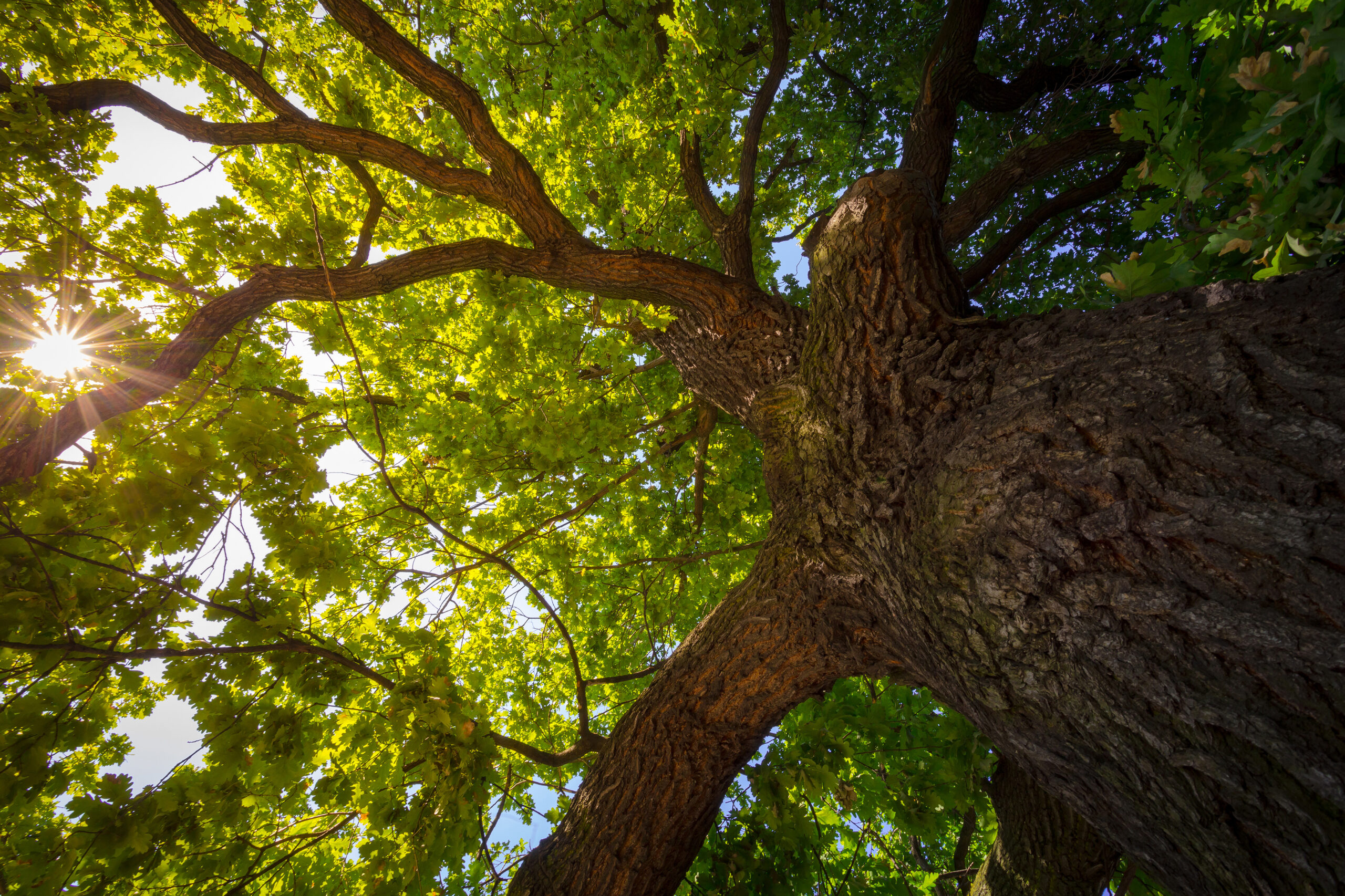
Look up under the old huge tree. Sunlight through the oak tree b
Look up under the old huge tree. Sunlight through the oak tree branches.
White Oak Group vs Red Oak Group
Oaks fall into two main groups. The white oak group has leaves with rounded lobes and no bristles. The red oak group has pointed lobes with tiny bristles at the tips. This simple check tells you a lot about how your tree will grow and how it might behave under stress.
- White oak group examples in Illinois: White oak, bur oak, swamp white oak, and chinquapin oak.
- Red oak group examples in Illinois: Northern red oak, pin oak, black oak, and shingle oak.
Easy Field Clues You Can Use Today
- Leaves: Rounded lobes signal white oak types. Pointed lobes with bristles signal red oak types.
- Acorns: White oak acorns mature in one season and taste less bitter to wildlife. Red oak acorns take two seasons and are more bitter.
- Bark: White oaks often have light gray, scaly bark. Red oaks tend to have darker bark with ridges and shallow furrows.
- Shape: Pin oaks often have many lower branches pointing down and long, horizontal limbs in the middle canopy. Bur oaks form very wide crowns with heavy spreading limbs.
If you want help, start with the University of Illinois Extension tree guides or use a photo ID app. For a sure answer, schedule a visit with Poul’s Landscaping & Nursery. Our team uses practical field traits, not just app guesses, to confirm species. Dialing in your tree identification Illinois saves time and helps avoid risky pruning windows common to oaks in our region.
Why Mature Oak Trees Drop Limbs Unexpectedly
Sudden limb drop is more common than you might think. Arborists often call it summer limb drop or sudden branch drop. It typically affects large, lateral branches on warm days and can occur even when the air is calm. While storms can snap branches, most surprising limb failures are a slow build of stress inside the tree that shows up all at once. Here are the most common causes we see around northern Illinois.
Summer Limb Drop on Hot, Calm Days
On bright, hot days after a stretch of heat or drought, internal tensions build inside long, heavy branches. Warm air, high humidity, and stress within the wood can trigger a brittle-type failure. The branch may shed a large portion with little warning. This is why late spring through late summer sees the most calls for unexpected oak limb failures.
End Weight and Overextended Limbs
Long limbs that reach far from the trunk carry a lot of end weight. As the branch grows a thick layer of leaves at the tip, the torque increases. Combine that with past light pruning or no pruning at all, and even a healthy limb can fail. Pin oaks and bur oaks often show this pattern due to their natural spreading habit.
Included Bark and Weak Branch Unions
When two branches grow close together and the bark folds inward between them, you get included bark. This creates a weak union. The joint cannot hold as well as a clean, U-shaped connection. Weak unions often split under their own weight, especially in mature trees with heavy lateral limbs.
Hidden Decay and Heartwood Issues
Fungi that break down wood fibers can hollow out a limb from the inside. You might not see major decay from the outside. Old pruning wounds, storm scars, or rubbing branches let fungi enter. Over time, the limb loses strength and fails under normal load. Fruiting bodies like shelf mushrooms or oozing spots can hint at internal decay.
Root Stress and Soil Conditions
Roots need oxygen. Packed soil, heavy foot traffic, new patios, driveways, or adding soil over roots can starve them. When the root system is stressed, the canopy becomes more brittle. Drought, poor drainage, or chronic overwatering can also stress roots and contribute to limb drop in mature oaks.
Past Improper Pruning
Topping or rough cuts weaken structure and invite decay. If a large branch was removed years ago without a proper cut, the wound may never have sealed well. This creates a long-term weak point. Poor pruning also leads to clusters of weak sprouts that can fail as they gain size.
Warning Signs Your Oak May Drop a Limb
Some limb failures are hard to predict, but many give subtle clues. If you see any of these, take them seriously and call Poul’s Landscaping & Nursery for an assessment.
- Cracks at branch unions or along large limbs.
- Mushrooms, conks, or oozing on the trunk or major limbs.
- Large cavities or old pruning wounds that never sealed.
- Deadwood high in the canopy or tips that never leafed out.
- Bark bulges or seams that look like healed splits.
- Long, horizontal limbs with a heavy leaf mass at the ends.
- Narrow V-shaped unions with bark pinched inside.
- Sudden leaf wilting on one limb when the rest of the tree looks normal.
- Soil changes near the tree, like new hardscape, trenching, or added soil.
- Heaving soil, exposed roots, or a new lean in the trunk.
What To Do Right Now If You Notice A Hazard
- Keep people, pets, and vehicles away from the area under the suspect limb.
- Take a few photos for records and insurance if needed.
- Do not climb a ladder or attempt to cut a heavy branch yourself. Many injuries happen this way.
- Call Poul’s Landscaping & Nursery to schedule an inspection. We will evaluate risk, identify your oak, and propose safe options.
- Lightly water the root zone if the soil is dry. Aim for slow, deep soaking rather than daily light sprays.
- Avoid piling mulch against the trunk. Keep a 2 to 4 inch layer over the root zone, pulled back from the bark.
- Do not add fill soil over roots or regrade until an expert reviews the site.
Prevention: Practical Steps To Reduce Limb Drop Risk
You cannot remove every risk from a living tree, but you can reduce the odds of sudden branch failures. Here are steps Illinois homeowners can put in place, with help from Poul’s Landscaping & Nursery.
Watering and Mulching
- During dry spells, give mature oaks a long, deep soak every 2 to 4 weeks. Focus on the area from halfway between the trunk and the dripline out past the dripline.
- Use 2 to 4 inches of natural mulch. Keep mulch off the trunk. Do not build a mulch volcano.
- Avoid daily lawn sprinklers that keep the trunk and soil soggy. Oaks prefer consistent, deeper moisture with time to breathe in between.
Smart Pruning and Structural Care
- Start structural pruning when trees are young. Create a strong central leader, good spacing, and wide branch angles.
- For mature oaks, use selective pruning to reduce end weight on long, horizontal limbs. Never top the tree.
- Follow the branch collar rule. Make clean cuts just outside the collar, not flush with the trunk.
- Consider cabling or bracing if a valuable limb has a weak union. This should be designed and installed by a qualified professional.
Soil Health and Root Protection
- Do not compact soil under the canopy with parking, storage, or heavy equipment.
- Protect the root protection zone, which often extends beyond the dripline.
- If soil is compacted, ask about air tilling and compost topdressing to improve aeration.
- Avoid piling new soil over roots. Even a few inches can stress an oak.
Plant Health Care With Care
- Fertilize only if a soil test shows a need. Overfertilizing can push weak growth.
- Monitor for pests and diseases. Early action prevents hidden decay later.
- Keep turf competition low near the trunk so roots can breathe and take up water.
When To Prune Oaks In Illinois
Timing matters. In much of Illinois, the safest window to prune oaks is late fall through winter. Many arborists prefer November through March. That reduces the risk of spreading diseases that can move in warm months. If a hazardous limb needs attention in spring or summer, pruning can still be done with extra care. Your species matters, which is why good tree identification Illinois homeowners can trust is part of every plan we make. If warm season cuts are unavoidable for safety, your crew may take added steps to protect the tree and the site.
Tree Identification Illinois: Common Oaks You Might Have
Knowing the common species helps set realistic expectations and care plans. Here are a few you are likely to see in Illinois neighborhoods and natural areas.
- White oak: State tree of Illinois. Broad, rounded crown. Strong wood, often very long-lived.
- Bur oak: Massive limbs and very wide spread. Thick twigs and deep-furrowed bark. Known for rugged strength but can carry heavy end weight.
- Swamp white oak: Tolerates wetter soils. Leaves are shiny above and pale below. Often shows strong fall color.
- Northern red oak: Fast growing with a tall, rounded crown. Dark bark with flat-topped ridges.
- Pin oak: Common in yards and parks. Strong central leader with many lower limbs that droop. Needs careful pruning as it matures to prevent weak, overextended branches.
- Black oak: Dark, blocky bark and bristle-tipped leaves. Prefers well-drained sites.
Each of these oaks can experience limb drop, but the pattern and risk level vary. A tailored plan based on species and site is the best way to protect people and property.
How Poul’s Landscaping & Nursery Can Help
Poul’s Landscaping & Nursery has deep roots in Illinois. Our story began in 1966 when Paul, known as Poul in Denmark, started the company with one employee, a pickup, and a trailer. With help from his wife, Margit, and years of hands-on learning under local experts, the company grew from a home basement office in Prospect Heights to a full nursery and landscape operation. Over time, the family added land in Long Grove and Wadsworth, built nursery fields, and welcomed the next generation into leadership. Today, Poul’s Landscaping & Nursery delivers a full range of services, from landscape design and planting to plant health care and seasonal enhancements. When it comes to oaks, we combine field-tested tree identification Illinois expertise with practical risk assessment and careful pruning.
Here is what you can expect when you call Poul’s:
- On-site species verification and an evaluation of structure, soil, and site conditions.
- Risk assessment that explains what is urgent, what is optional, and what to monitor.
- Thoughtful pruning plans to reduce end weight without topping or harming the tree.
- Soil improvement, mulching, and watering guidance for long-term tree health.
- Help with cabling and bracing if it fits your goals and the tree’s condition.
- Removal and replacement options if a tree has reached the end of its safe life.
We know every property is different. Whether you have a landmark bur oak shading a patio or a row of pin oaks along the drive, we will help you balance safety, beauty, and budget.
FAQs: Oak Limb Drop and Identification in Illinois
Why did my oak drop a big limb on a calm, sunny day?
That is a classic case of summer limb drop. Heat, internal stress, and heavy end weight can trigger a sudden break in a mature branch. It can happen even with no wind.
Is limb drop a sign my tree is dying?
Not always. Many healthy oaks drop a limb once in a while. That said, it is a red flag to check for decay, weak unions, or root problems. A professional inspection is the safest next step.
How does tree identification Illinois help reduce risk?
Knowing your species guides pruning timing, growth expectations, and risk patterns. For example, pin oaks often need careful end weight reduction. White oaks may require less frequent pruning but careful timing to avoid disease risks. Identification leads to better decisions.
Can I stop limb drop completely?
No living tree is risk free, but you can reduce the odds. Smart pruning, protecting roots, proper watering, and watching for early signs go a long way. Cabling and bracing can help protect key limbs.
When is the best time to prune oaks in Illinois?
Late fall through winter is often best. If safety requires a summer cut, work with a professional who takes extra steps to protect the tree and your property.
A Simple Checklist to Keep Your Oak Safe
- Confirm the species through reliable tree identification Illinois resources or with Poul’s team.
- Scan for weak unions, cracks, and heavy horizontal limbs each spring and mid-summer.
- Keep a wide mulch ring and avoid compacting soil under the canopy.
- Water deeply during droughts, then let soil breathe between waterings.
- Prune to reduce end weight and improve structure. Never top an oak.
- Schedule a professional inspection every few years or after major weather events.
Protect Your Oak and Your Property With Local Experts
Your oak is a legacy tree. With the right care, it can thrive and stay safe for decades. If you have questions about sudden limb drop, pruning timing, or want friendly, expert tree identification Illinois homeowners trust, Poul’s Landscaping & Nursery is ready to help. We offer practical advice, clear action plans, and careful work that respects your trees and your yard. Contact Poul’s Landscaping & Nursery today to schedule an evaluation and give your oak the thoughtful care it deserves.
