
What Are These Bugs Eating My Tree Leaves?
What Are These Bugs Eating My Tree Leaves?

Noticing chewed, curling, or skeletonized leaves can be alarming. The good news is that most leaf damage has a straightforward cause and a smart solution. In this guide, you will learn how to identify the most common pests, what their damage looks like, and which steps you can take right now. If you need expert help, Poul’s Landscaping & Nursery is ready with local knowledge and proven treatments to protect your landscape.
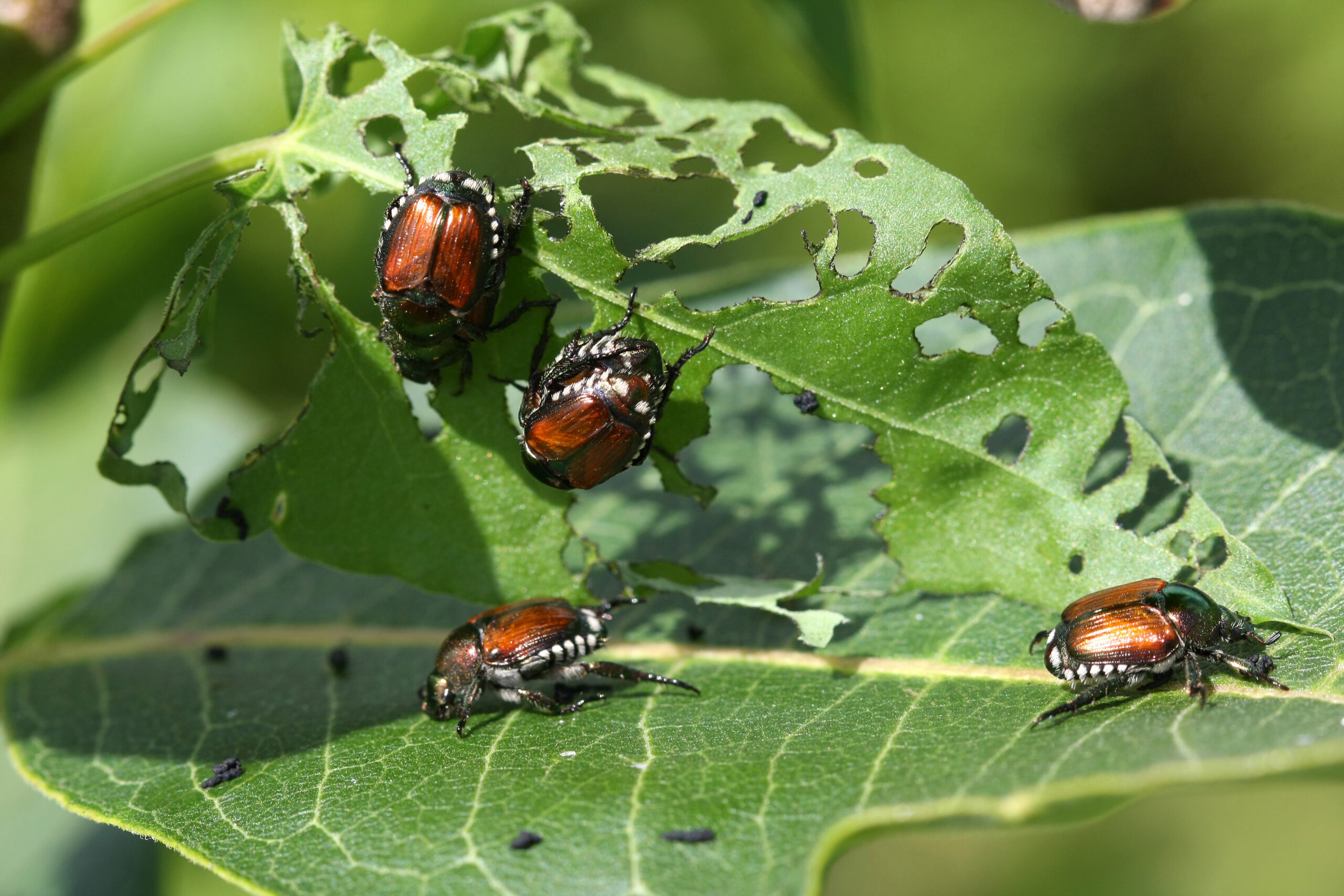
Japanese Beetle – Popillia japonica
Why Are My Tree Leaves Being Eaten?
Leaf damage usually comes from a handful of insects that feed during specific seasons. Some pests cause sudden, dramatic loss of foliage. Others do slow, steady damage that shows up as discoloration or thinning leaves. Healthy trees can often tolerate light feeding, but repeated stress and heavy infestations can weaken even mature trees. Quick identification is the key to effective tree pest control, and the timing of your response often matters more than the specific product you choose.
Chicago area yards host a wide range of tree species like oaks, maples, lindens, crabapples, elms, and birches. Each tree has its own set of common pests. Learning a few telltale clues helps you match the bug to the damage fast so you can take the right action and protect your investment.
Quick ID Guide: Which Bug Is Eating My Tree Leaves?
Caterpillars and Webworms
Appearance: Soft bodied larvae that may be smooth or hairy, often green or brown. You might see webbed nests near branch tips. Damage: Ragged chewing on leaves, small to large holes, and in heavy outbreaks, complete defoliation on parts of the canopy. Webworms create silk tents and feed inside. What helps: Prune out and destroy small webbed nests. Handpick reachable clusters. Bacillus thuringiensis var. kurstaki, known as Bt, is a selective treatment for young caterpillars and is gentle on many beneficial insects. Timing matters, since treatments work best on small larvae.
Japanese Beetles
Appearance: Metallic green and copper adult beetles active in mid to late summer. Damage: Skeletonized leaves that look lacey, often starting at the top of the tree and on sunlit sides. Lindens, crabapples, and birches are favored hosts. What helps: Shake beetles into soapy water in the morning when they are sluggish. Cover high value small trees with fine netting while beetles are flying. Consider targeted foliar sprays or systemic options applied at the correct time by a professional. Avoid beetle traps near trees since they can draw more beetles into your yard.
Aphids
Appearance: Tiny pear shaped insects ranging from green to black, often clustered on new growth or leaf undersides. Damage: Curled or distorted leaves, sticky honeydew on foliage, and sooty mold growing on that residue. Ants may farm aphids, which is an extra clue. What helps: A firm blast of water knocks them off. Insecticidal soap or horticultural oil offers good control when applied thoroughly. Encourage lady beetles and lacewings. Manage nearby ant populations to reduce aphid protection.
Leaf Miners
Appearance: Larvae that feed inside leaves. You usually will not see the insect, only winding tunnels or blotches. Damage: Pale squiggly lines or translucent patches on leaves. Common on birch, boxwood, and some ornamental trees. What helps: Rake and dispose of leaf litter to reduce overwintering. For high value specimens, time treatments to adult flight or early larval stages. Monitoring and timing are essential for success.
Sawflies
Appearance: Caterpillar like larvae that are actually wasp relatives. Often found in groups on needles or leaves. Damage: Rapid defoliation on certain hosts, such as pines or rose family plants. What helps: Handpick or prune out small clusters. Insecticidal soap or spinosad can be effective. Note that Bt for caterpillars does not work on sawflies, so correct ID matters.
Scale Insects
Appearance: Immobile bumps on twigs or leaves that can look like fish scales or small shells. Crawlers are the only mobile stage visible to the naked eye. Damage: Thinning foliage, sticky honeydew, and black sooty mold. What helps: Horticultural oil in the dormant season helps smother overwintering scales. Well timed treatments during the crawler stage are most effective. Severe cases often need professional help for accurate timing and tree pest control.
Spider Mites
Appearance: Tiny, speck like arachnids, often on the undersides of leaves. Fine webbing may be present, especially in hot, dry weather. Damage: Leaves look stippled, dusty, or bronzed. What helps: A strong stream of water reduces populations. Insecticidal soap and horticultural oil work when applied thoroughly. Improve plant vigor with proper watering and mulch since drought favors mites.
Weevils and Leaf Beetles
Appearance: Small beetles with snouts or distinct chewing mouthparts. Larvae may feed on roots while adults chew leaf edges. Damage: Notched or scalloped leaf margins. Some species feed at night, so daytime scouting can miss activity. What helps: Hand collecting at dusk with a flashlight, sticky barriers on trunks for some species, and targeted foliar treatments if needed.
Galls and Gall Makers
Appearance: Swellings or odd shaped growths on leaves and twigs. Caused by certain wasps, mites, or other insects. Damage: Usually cosmetic on oaks and other hosts, though severe cases can stress young trees. What helps: Prune out heavily affected twigs and keep the tree healthy. Most galls do not require treatment.
Leaf Damage Clues You Can Spot Fast
- Skeletonized leaves that look lacey point to Japanese beetles or certain caterpillars.
- Ragged holes or edges suggest general chewing by beetles or caterpillars.
- Blotchy or winding tunnels inside leaves indicate leaf miners.
- Curling or distorted new leaves with sticky residue signal aphids or other sap feeders.
- Fine webbing and bronzed foliage suggest spider mites, especially in hot, dry weather.
- Sticky honeydew and black sooty mold often accompany aphids or soft scales.
- Tiny pellets or sawdust like frass under the canopy can indicate active feeding above.
- Silky tents on branch tips point to webworms or tent caterpillars.
Tree Pest Control Basics: A Simple Five Step Plan
- Inspect and identify. Look at leaf undersides, branch tips, and trunk bark. Note the pattern of damage and take clear photos. Many solutions depend on treating the right pest at the right stage.
- Support tree health. Water deeply during dry spells, add a 2 to 3 inch mulch ring that stays off the trunk, and avoid heavy fertilization when trees are stressed. Healthy trees resist and recover from pests better.
- Use mechanical controls. Prune out small infested branches, remove webbing, and handpick clusters. A hose set to a firm spray can knock down aphids and mites fast.
- Encourage and add biological controls. Preserve lady beetles, lacewings, parasitic wasps, and birds. Choose targeted treatments that spare beneficials whenever possible.
- Apply targeted treatments when needed. Use insecticidal soap, horticultural oils, Bt, or spinosad based on the pest and timing. For tough or recurring issues, consult Poul’s Landscaping & Nursery for precise timing and professional grade options.
Safe Products and Smart Timing
Most pests have a window when treatments work best. Caterpillars are easier to control when they are small. Scale insects are vulnerable during the crawler stage. Japanese beetle adults are most active in mid summer. Horticultural oils and insecticidal soaps are effective and low impact when applied correctly, but thorough coverage is essential. Always read and follow label directions, avoid spraying open flowers to protect pollinators, and be mindful of wind and drift. If you are unsure about timing, count on Poul’s Landscaping & Nursery to schedule applications for the highest impact and the least disruption to your yard.
Season by Season Tree Pest Control for Northern Illinois
- Early spring: Inspect buds and young leaves for aphids and scale. Apply dormant oil on appropriate species before bud break if scale was a past problem. Refresh mulch and check irrigation for the season.
- Late spring: Watch for caterpillars and webbing. Prune out small nests and consider Bt on young larvae. Begin mite monitoring during warm spells. Check for leaf miner activity on susceptible trees.
- Summer: Monitor for Japanese beetles and skeletonized leaves. Hand collect in the morning and protect prized small trees with netting. Continue scouting for aphids and mites, especially during dry periods.
- Late summer to early fall: Evaluate overall canopy health. Light defoliation may not warrant treatment if the tree is otherwise vigorous. Reduce water stress as days remain hot.
- Fall: Rake and dispose of leaf litter to reduce overwintering pests and disease spores. Inspect bark for scale and egg masses. Plan structural pruning for winter.
- Winter: Dormant season is ideal for pruning and oil applications on certain species. Schedule an assessment with Poul’s Landscaping & Nursery to build your spring action plan.
When to Call Poul’s Landscaping & Nursery
Some pest issues are best handled by a trained professional. Reach out when any of the following applies:
- You see widespread defoliation or repeated outbreaks on the same tree.
- The tree is large, near power lines, or difficult to access safely.
- You have high value specimens like mature oaks, specimen Japanese maples, or landmark lindens.
- You are unsure about the pest or the right timing for treatment.
- Honeydew, sooty mold, or dieback is getting worse even after home efforts.
Poul’s Landscaping & Nursery brings decades of regional experience, careful identification, and well timed solutions that protect both your trees and the beneficial insects that keep your yard in balance.
How Poul’s Landscaping & Nursery Protects Your Trees
Our team pairs careful diagnosis with an integrated approach to tree pest control. We start with a detailed inspection that looks for pest activity, plant stress, soil moisture, and cultural issues. Then we design a simple plan with clear steps and timing. When treatments are needed, we use targeted products and application methods to minimize off target effects and protect your landscape. That may include dormant oils for scale, selective biologicals for caterpillars, or precisely timed sprays for leaf miners and mites. We can also recommend pruning, mulching, irrigation adjustments, and fertilization plans that improve tree resilience.
Poul’s Landscaping & Nursery is a family built company with deep local roots. Founded in 1966 after Paul, known as Poul, moved from Denmark, the business grew from a small home operation to include nursery fields and a full service landscape team. Today we operate nursery acreage in the northern suburbs and deliver complete care across the region. Our clients trust our knowledge of local pests, weather patterns, and tree species. Whether you need one time help or an ongoing plant health care program, we are here to make tree care easier.
Frequently Asked Questions About Tree Pest Control
Will leaf damage kill my tree?
Most healthy, established trees can tolerate occasional defoliation and will refoliate the next season. Repeated, heavy damage weakens trees and makes them vulnerable to other stresses. Fast identification and timely action greatly reduce long term risk.
Do I need to treat every time I see a pest?
Not always. Many pests have natural predators that keep them in check. A light aphid presence may not require treatment, especially late in the season. Focus on heavy infestations, repeated issues, and damage on young or newly planted trees that cannot afford the stress.
Are treatments safe for pets, kids, and pollinators?
When used according to the label and applied by trained professionals, modern targeted products are designed for safety and precision. We choose selective options whenever possible and time applications to reduce exposure. We also avoid treating open blooms to protect pollinators. If safety is a concern, ask Poul’s Landscaping & Nursery to explain the options and timing for your property.
Should I fertilize a stressed tree?
Fertilization is helpful when a soil test shows nutrient needs or when a tree is recovering from defoliation in nutrient poor soil. Too much nitrogen can push soft growth that attracts pests. A balanced, soil based approach is best. We can test your soil and recommend the right plan.
Do beetle traps work for Japanese beetles?
Traps attract beetles and can pull more insects into your yard than they remove. Use traps well away from susceptible trees if you want to monitor activity, not as a main control method. Hand collection, netting, and professional timing are more reliable.
Simple Prevention Checklist
- Water deeply and less often to encourage strong roots, especially during dry spells.
- Mulch in a wide, shallow ring, keeping mulch a few inches off the trunk.
- Prune for airflow and structure during the dormant season.
- Clean up fallen leaves and pruned material to reduce overwintering pests.
- Inspect leaf undersides and new growth every week during spring and summer.
- Plant a mix of species to reduce the impact of any single pest.
- Encourage beneficial insects by limiting broad spectrum sprays and planting diverse flowers.
- Record what you see, when it starts, and what works. Your notes improve timing next year.
Why Local Expertise Matters
Timing is everything in effective tree pest control, and timing is local. Weather patterns in northern Illinois can speed up or delay pest life cycles by weeks. A solution that works in another region could miss the mark here. Poul’s Landscaping & Nursery tracks local conditions and uses field scouting to time treatments. That means better results with fewer applications and less stress on your landscape.
Ready to Stop Leaf Damage and Strengthen Your Trees?
Start with a close look at your leaves and note what you see. Try the simple steps in this guide for quick relief. If the problem is bigger than expected, or if your trees are valuable centerpieces in your yard, call Poul’s Landscaping & Nursery. Our team will identify the pest, explain the options, and put a clear plan in motion. Protecting your trees today leads to healthier shade, stronger structure, and a more beautiful yard tomorrow.
From spring bud break to winter dormancy, Poul’s Landscaping & Nursery is your neighbor for tree pest control and complete plant health care. Contact us to schedule an on site assessment and take the guesswork out of protecting your trees.
